REVIEW · GRAN CANARIA
Gran Canaria: Rent Electric Scooter Kick Start
Book on GetYourGuide →Operated by Bici Bike Vintage · Bookable on GetYourGuide
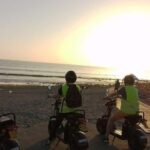
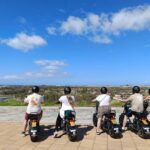
The south of Gran Canaria feels made for two wheels. This is a self-guided electric scooter rental that lets you move easily without getting stuck on schedules. You’ll start with a simple safety setup, then follow provided routes to places like Maspalomas and Meloneras in an eco-friendly way.
I especially like how low-stress the experience is: no driving license is required if you’re old enough, and you get both a paper map and phone support so you’re not wandering. I also like that the scooter comes with real ride help—helmet, reflective vest, and a charger—plus roadside assistance in the Maspalomas area if something goes wrong.
The main drawback to consider: this isn’t for everyone. If you don’t feel steady on a bike, have balance issues, or want to ride on sand, this setup won’t match your expectations.
In This Review
- Key points to know before you ride
- How this e-scooter rental works in Gran Canaria’s south
- Price and value: $41 that buys time (and less hassle)
- What’s included (and why it matters on the road)
- Battery reality: planning around 30 km autonomy
- Entering the ride: minimum age, license rules, and practice time
- Where you’ll go: Playa del Inglés, Maspalomas, Meloneras (and how to see it well)
- Playa del Inglés: start easy, get your bearings fast
- Maspalomas: dunes, parks, and that classic lighthouse stop
- Meloneras Beach: combine sea time with route-friendly stops
- Riding rules that keep your day smooth
- Comfort and clothing: small details, big difference
- Group size: why small matters when you’re renting on your own
- Getting help on the spot: map, phone support, and assistance hours
- Route flexibility: extending your time when you want more
- Best fit: who should book this scooter rental
- Things you should plan for before you start
- Quick checklist of logistics you’ll want handy
- Should you book this Gran Canaria e-scooter rental?
- FAQ
- Do you need a driving license to ride the e-scooter?
- What is the minimum age to drive the scooter?
- How far can the scooter go on a charge?
- Are there limits on where you can ride?
- What do I need to bring, and what shoes are allowed?
- What happens if the scooter breaks down in Maspalomas?
Key points to know before you ride

- No license needed for drivers over 16, with an accompanying paying parent for under-18 riders
- Battery range is 30 km, but real autonomy depends on weight, hills, and assistance level
- You set your own itinerary, with route help via paper map and mobile support
- Legal-ish freedom, with limits: allowed on roads and cycling paths, not off-road, sand, or pavement
- Small group size up to 8 participants, which helps you get oriented faster
- Deposit required (100€ per scooter) plus closed-toe shoes and safety gear rules
How this e-scooter rental works in Gran Canaria’s south
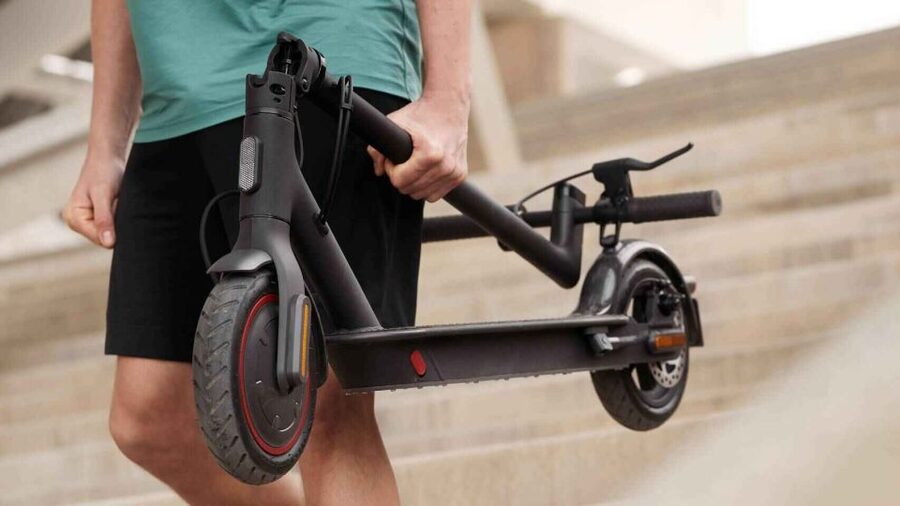
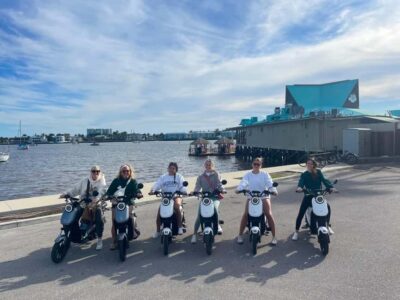
Think of this as a flexible “ride-and-explore” way to see Gran Canaria’s southern coast. You don’t join a set guided route. Instead, you rent an electric scooter for a window ranging from 3 hours to 7 days, then build your own plan around key areas like Playa del Inglés, Maspalomas, and Meloneras Beach.
The provider (Bici Bike Vintage) starts you with the basics: a safety check, a chance to practice before you roll out, and the gear you’ll use on the street. You also get a paper map and a mobile support for your phone, so you can follow directions and use Google Maps alongside the route suggestions. In practice, this is what keeps it from feeling like “tourist guessing.”
You’ll cruise with the confidence that you’re not stuck in heat walking everywhere. That matters in this part of Gran Canaria, where distances can add up fast. The scooter is your legs—just with a motor—so you can spend your energy on enjoying the sights instead of grinding uphill or timing bus connections.
Price and value: $41 that buys time (and less hassle)
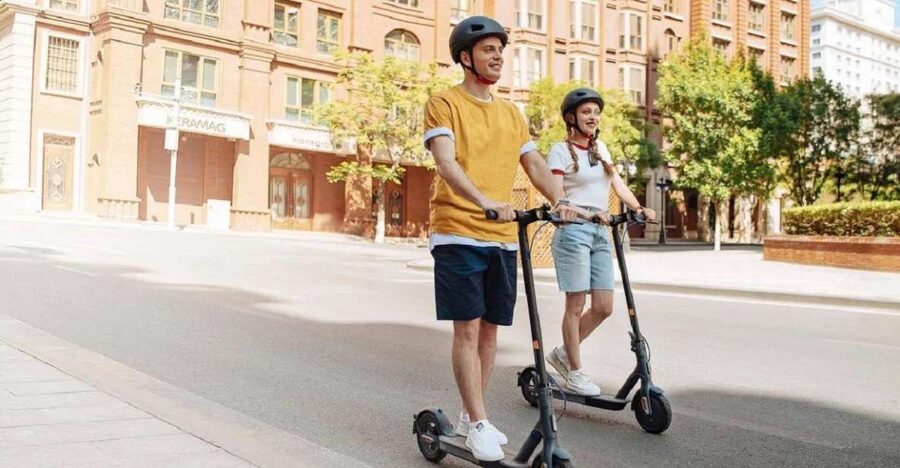
The rental starts around $41 per person, depending on the duration option you pick. On its face, it’s “just transport.” But the value comes from what you avoid.
- You avoid spending the day locked into buses or taxis on limited schedules.
- You avoid the mental load of planning a tight self-guided route with no help.
- You gain access to more stops in one day than most people manage on foot.
Also, the scooter includes items that would otherwise be extra costs or extra hassle—helmet, reflective vest, a charger, and a security kit for knees and elbows. Add the roadside assistance in the Maspalomas area during opening hours, and it’s not just a rent-and-hope situation.
One more value note: the experience is built for independence, but not for total DIY. You’re given route support. That’s the sweet spot for travelers who want freedom without the stress.
What’s included (and why it matters on the road)
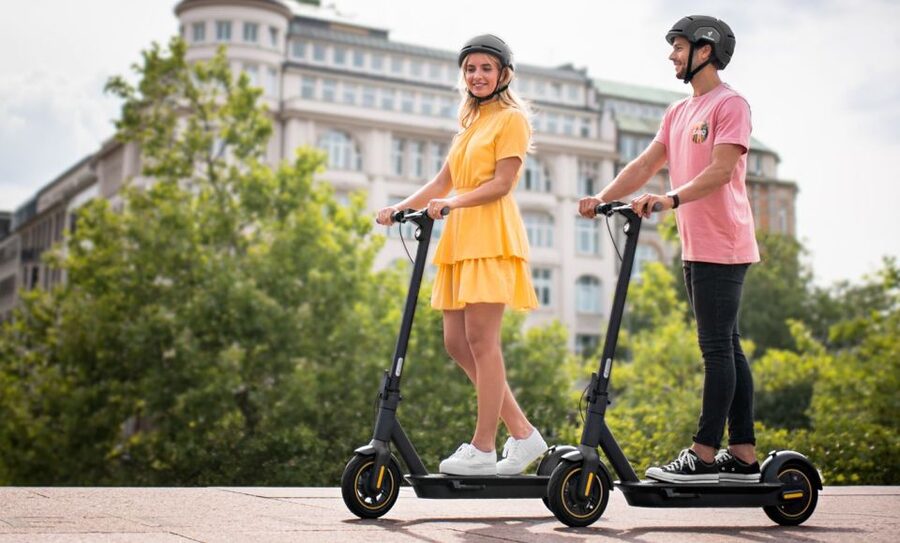
Here’s what you actually get with the rental, and why it helps:
Safety gear you wear for real
- Helmet (1)
- Reflective vest (1)
- Knee and elbow protection
This matters because you’re riding on roads and cycling paths, not a closed car-free park. Even if you’re careful, the real world includes traffic, turns, and uneven road edges.
Navigation support so you don’t get stuck
- City paper map
- Mobile support to fix your phone and view routes (and you can also use Google Maps)
This is one of the most practical inclusions. You can check your own routes while still using the suggested path coverage for key areas.
Ride support
- Charger
- Roadside assistance in the Maspalomas area if there’s a flat tire or scooter failure during opening hours
The battery life is stated as about 30 km, and that’s where planning comes in. You’ll want to treat 30 km as a guideline, not a promise, especially with hills and rider weight affecting consumption.
Battery reality: planning around 30 km autonomy

The scooter’s battery autonomy is listed as about 30 km, but real range changes depending on:
- your weight (maximum capacity is 100 kg / 220 lbs),
- the slope of the route,
- and your level of electric assistance.
Here’s how I’d think about it if you want a smooth day: plan a route that has a comfortable buffer. If you’re the type who likes lots of stops, consider shorter loops rather than a single long one-way push.
Also, don’t plan to treat sand dunes like a “destination drive.” The scooter is described as not suitable for off-roads, sand, or pavement. So yes, you can visit Maspalomas and see the golden sand dunes—but you’ll do it by riding to nearby viewpoints or paths, not by driving onto the sand itself.
Entering the ride: minimum age, license rules, and practice time
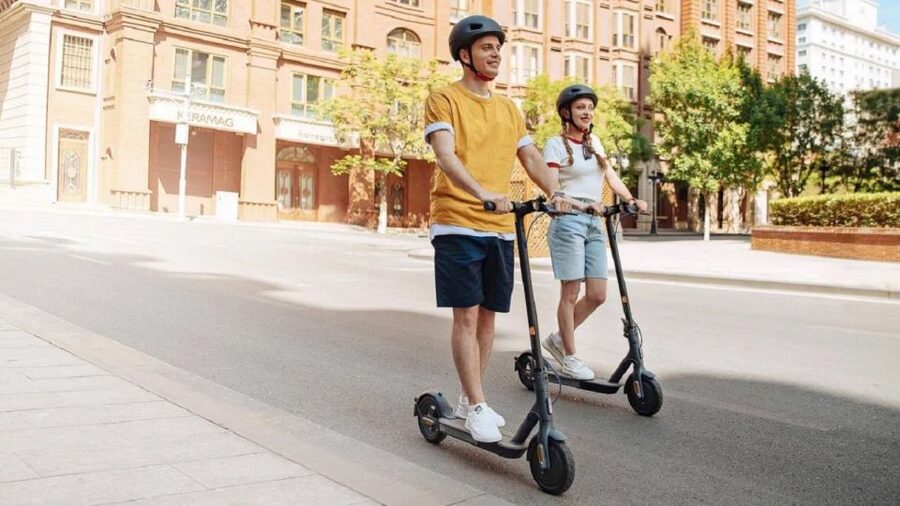
Good news up front: driving license is not required. The rules are simple and strict:
- You must be at least 16 years old to drive, and a paying parent must accompany you.
- Children under 16 can’t drive.
- You’ll need ID or passport and you’ll be asked for a 100€ deposit (cash or card) per scooter.
This is also where the experience shows it’s not trying to be “wild.” The process includes safety practice before you set off. In one case, if someone didn’t feel confident on the scooter due to traffic or road surface stress, they were allowed to swap to an e-bike. That’s a smart safety-first approach, and it’s worth keeping in mind if you’re nervous about handling.
One caution: this activity isn’t recommended for people who:
- don’t know how to ride a bike,
- have balance problems,
- or have vertigo.
If any of those apply, you may be happier with a more stable option like walking tours, taxis, or a different rental type.
Where you’ll go: Playa del Inglés, Maspalomas, Meloneras (and how to see it well)

This experience focuses on Gran Canaria’s southern area. You’ll be using the map and phone support to move between the main zones. Since it’s self-guided, you decide how long to linger.
Below is a practical “how to use each place” guide.
Playa del Inglés: start easy, get your bearings fast
Playa del Inglés works well as a starting point because you can test your comfort level and pacing before you head into more specific nature spots. You can use it like your warm-up zone: ride a little, stop for photos, and confirm you know how to follow the route support.
What to watch for: traffic density can rise around popular areas. If you’re cautious, stick to the cycling paths and follow the route suggestions closely, rather than improvising new shortcuts.
Maspalomas: dunes, parks, and that classic lighthouse stop
Maspalomas is the headline area for most people. You’re set up to reach:
- the Maspalomas Botanical Park (noted for 500+ tropical plant species),
- the Oasis of Maspalomas (a small lagoon used by migratory birds; noted as nearly 40 different bird species in winter nesting grounds),
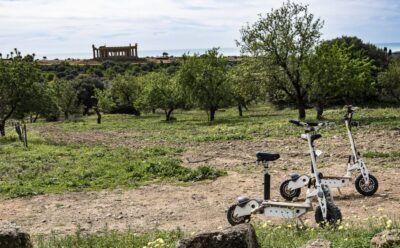
- and the old Maspalomas Lighthouse, described as a scenic protected cultural landmark.
How to make it feel “worth it” (not just fast sightseeing):
- Plan to mix one nature stop with one viewpoint stop.
- Don’t rush the park and lagoon. If you like birdwatching or shaded walks, you’ll need time.
A key limitation: the scooter isn’t meant for sand or off-road riding. So you’ll likely approach the dunes and lighthouse via normal paths nearby, then do the “real viewing” on foot.
Meloneras Beach: combine sea time with route-friendly stops
Meloneras tends to pair well with a lighthouse visit. One of the most useful tips is that the route planning can help you reach the lighthouse while avoiding roads with heavier traffic. That makes a difference in how relaxed the day feels—especially in the heat.
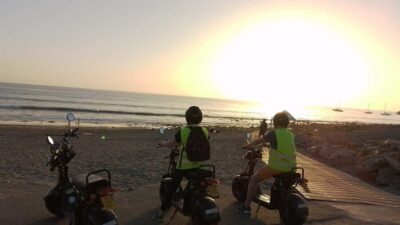
If you want a calmer end to your day, Meloneras is a good place to slow down. You can take photos, enjoy the shoreline, and then ride back when your battery is getting close to its comfortable limit.
Riding rules that keep your day smooth

The activity allows you to ride:
- on road
- and on cycling paths
So you’re not restricted to one bike-lane bubble. But you are restricted in important ways:
- not off-road,
- not on sand,
- not on the pavement.
That’s why route guidance matters. A ride that looks short on a map can become a headache if it forces you onto surfaces the scooter can’t handle.
Also, keep in mind the weight limit: 100 kg (220 lbs). If you’re near that cap, you’ll likely feel it in handling and battery use.
Comfort and clothing: small details, big difference

Bring closed-toe shoes. Open-toed shoes are not allowed. This is one of those rules that prevents blisters and better protects you if you need to stop suddenly.
Also: you’ll be wearing safety gear (helmet plus elbow and knee protection). That means you’ll want to wear something you don’t mind getting warm in. If you run hot, plan for breaks.
Group size: why small matters when you’re renting on your own
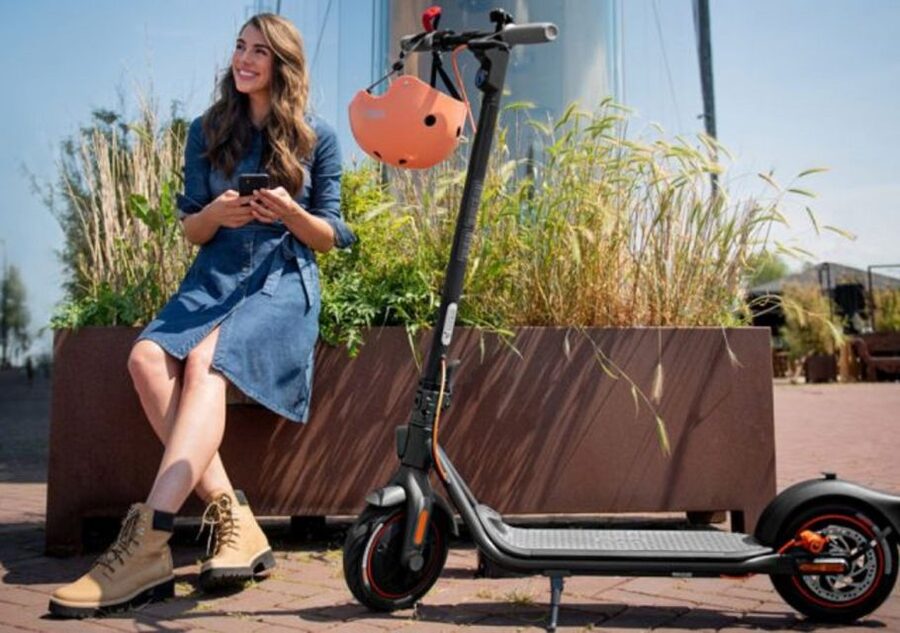
This is a small group setup, limited to 8 participants. Even though you’re self-guided after the initial orientation, a smaller group helps with:
- getting instructions clearly,
- practicing before you start,
- and getting quick support if something feels confusing about the scooter controls.
There’s less waiting around, too. If you’re trying to start early in the day, that matters.
Getting help on the spot: map, phone support, and assistance hours
You’re not left alone with a scooter and a vague idea of where to go. The combination of:
- paper map
- mobile support for your phone
- and Google Maps compatibility
…lets you keep moving confidently without drifting off into wrong turns.
And if you have trouble, there’s roadside assistance in Maspalomas during opening hours. That means you’re not stranded in a worst-case scenario while you wait out a random breakdown.
Route flexibility: extending your time when you want more
One practical detail I really like: it’s possible to adjust your time by message. In at least one case, the experience was extended by about one hour via WhatsApp. That’s useful if you arrive somewhere and decide you want to linger a bit longer.
Just keep in mind you’ll be working within the provider’s operational hours for assistance, so don’t plan to test the limits late at night.
Best fit: who should book this scooter rental
This works best if you want:
- independent sightseeing with gentle structure,
- a low-effort way to cover multiple southern areas,
- and an easy route-support system (map + phone guidance).
It’s also a good match for riders who are comfortable with bike handling and don’t mind riding on real roads and cycling paths.
Consider another option if you:
- have vertigo,
- are unsure on a bike,
- want to drive on sand,
- or you’d feel stressed by traffic and road surfaces.
Things you should plan for before you start
A smooth day comes from a few pre-decisions:
- Keep your route loop within the 30 km ballpark, with a buffer.
- Don’t aim for sand riding. Treat dunes as a viewing area, not a driving surface.
- Wear closed-toe shoes and use the safety gear properly.
- Bring your passport or ID and be ready for the 100€ deposit.
Also, if you’re the type who likes to stop often, plan for slower riding earlier in the day so you don’t rush later.
Quick checklist of logistics you’ll want handy
- ID/passport ready
- 100€ deposit (cash or card)
- closed-toe shoes
- helmet and safety gear provided
- phone mounted using the included support
- your route set before you go far from the main areas
- a realistic battery plan (hills and assistance level change range)
Should you book this Gran Canaria e-scooter rental?
If you’re planning a trip focused on Playa del Inglés, Maspalomas, and Meloneras, this is a strong value. For a relatively straightforward starting price, you get mobility, safety gear, navigation support, and help if something breaks down in the Maspalomas zone. The self-guided format lets you move at your rhythm, not someone else’s.
Book it if:
- you want independence without getting lost,
- you feel confident riding a bike,
- and you’re okay with the scooter’s limits (no sand/off-road/pavement).
Skip it if:
- balance is an issue,
- you’re aiming to ride directly on the dunes,
- or road riding makes you uneasy.
In short: if you want a practical way to see Gran Canaria’s south without burning your legs, this kick-start electric scooter rental is an easy yes—just ride it smart, respect the surfaces it can’t handle, and let the route support do its job.
FAQ
Do you need a driving license to ride the e-scooter?
No. A driving license is not required to drive an e-scooter kick start, as long as you meet the age rules.
What is the minimum age to drive the scooter?
You must be at least 16 years old to drive. If you’re under 18, you must be accompanied by a paying parent.
How far can the scooter go on a charge?
The battery life is about 30 km, but real autonomy can vary based on your weight, route slope, and the level of electric assistance you choose.
Are there limits on where you can ride?
Yes. You may drive on roads and cycling paths, but the scooter is not suitable for off-roads, sand, or pavement.
What do I need to bring, and what shoes are allowed?
Bring your passport or ID card and be ready for a deposit. Closed-toe shoes are required, and open-toed shoes are not allowed.
What happens if the scooter breaks down in Maspalomas?
There is roadside assistance in the Maspalomas area during opening hours if there is a puncture or scooter failure.