REVIEW · HO CHI MINH CITY
Ho Chi Minh: Historical City Scooter Tour
Book on GetYourGuide →Operated by AN Tours Vietnam · Bookable on GetYourGuide
Saigon moves fast on two wheels. What makes this Ho Chi Minh City scooter tour special is that it strings together big-name sites and lesser-seen local stops in one day across 8 districts. I love the mix of famous landmarks with quieter streets where the city feels more lived-in, and I also love the way the guide puts meaning behind heavy moments like the War Remnants Museum. The main consideration is simple: scooter riding in traffic is not for everyone, and the tour is not suitable for people with back problems, mobility impairments, heart problems, or wheelchair users.
It’s built around a private experience, and the driver and guide help you feel steady as you move through the city. You might get guides such as Halsey, Henry and Hannah, Son and Sunny, or Midori, with support from a local English-speaking driver (and sometimes extra help like Thong). You’ll be provided a good helmet and raincoat, and the tour stays conversational in Vietnamese and English.
In This Review
- Key things that make this tour worth your time
- A 4-Hour Saigon Scooter Loop Through 8 Districts
- Pickup, Helmets, and the Private Driver Setup
- Notre-Dame Cathedral and Saigon Post Office: Faith and French-Era Details
- War Remnants Museum and the Thích Quang Đức Monument
- The Oldest Apartment Built From Wartime Saigon
- Flower Market Open Almost 24 Hours: Da Lat Arrivals
- A 75-Year Coffee Shop and a Method Few Places Use
- Chinatown and the 300-Year-Old Thiên Hậu Temple
- How the Scooter Ride Feels (And Who Should Skip It)
- Price and Value: Is $49 Fair for This Much City Time?
- Should You Book This Ho Chi Minh Historical Scooter Tour?
- FAQ
- How long is the Ho Chi Minh historical city scooter tour?
- What time does the pick-up happen?
- Is this tour private?
- What’s included in the price?
- Is there an English-speaking guide?
- What should I bring?
- Does the tour include helmet and rain protection?
- Is the tour suitable for wheelchair users or limited mobility?
- What places are visited during the tour?
Key things that make this tour worth your time
- Private feel, full-city coverage: See highlights and local areas across 8 districts in about 4 hours
- Classic landmarks plus purposeful details: Cathedral, post office letter-writer, war memorial sites, and more
- War history handled with care: Stops connect the past to how people live now
- Markets and everyday sights, not just museums: Flower market and Chinatown market energy both matter here
- Practical comfort help: Helmet and raincoat, plus a flexible plan that can shift to your pace
A 4-Hour Saigon Scooter Loop Through 8 Districts
If you only have a short window in Ho Chi Minh City, this is a smart way to get your bearings fast. Instead of trying to piece together a bunch of separate activities, you ride a set route that hits the big historical stops and then keeps going into the parts of town most visitors miss.
The biggest value isn’t just that you cover many places. It’s that the day is organized like a story: faith and French-era architecture, wartime scars and remembered protests, then the daily rhythms of coffee, flowers, and Chinatown life. That mix is why this tour works so well even if you’re not a hardcore history buff.
You also get a private scooter tour setup, so it’s easier to ask questions and adjust your pace. One guide can steer you through the route while giving enough context to make each stop click into place.
Pickup, Helmets, and the Private Driver Setup
Plan for a pick-up that’s either 8:00 AM or 1:00 PM. The company meets you at your hotel lobby, so you avoid the hassle of figuring out where to start. You’ll be on a scooter with a driver who knows the traffic and route.
You’ll also receive a good-quality helmet and raincoat. That matters more than people think in Saigon, where weather and road spray can change fast. Wear comfortable shoes, and keep sunglasses handy if the sun is out.
The tour is listed as not suitable for people with back problems, mobility impairments, heart problems, or wheelchair users. That’s worth taking seriously. Scooter seats and road vibrations can be rough even when the driver is careful, and the experience is built around riding between stops.
Notre-Dame Cathedral and Saigon Post Office: Faith and French-Era Details
The tour begins at the most famous cathedral in Ho Chi Minh City, built using materials from France. Even if you’ve seen cathedrals before, this stop lands differently because of the blend of architecture and local history around it. It’s a strong starting point because it gives you a quick visual anchor for the city’s layered past.
From there, you visit the post office. What makes this more than a pretty building is the human touch: you meet a 90-year-old man, described as the last hand-written letter-writer in Vietnam. It’s an unusual encounter, and it reframes the idea of communication in a place that now runs on faster tech. You’ll likely leave thinking about how much effort goes into handwritten letters and how that tradition still has meaning here.
A practical note: if you like photography, this is one of the better early stops for clear views before the day warms up and crowds thicken.
War Remnants Museum and the Thích Quang Đức Monument

After you get your bearings with earlier landmarks, the tour turns to war history. The War Remnants Museum is the kind of place that changes your perspective fast. Vietnam went through major conflict, and this museum focuses on stories and consequences that can feel unfamiliar if you only know the headline-level version of the war.
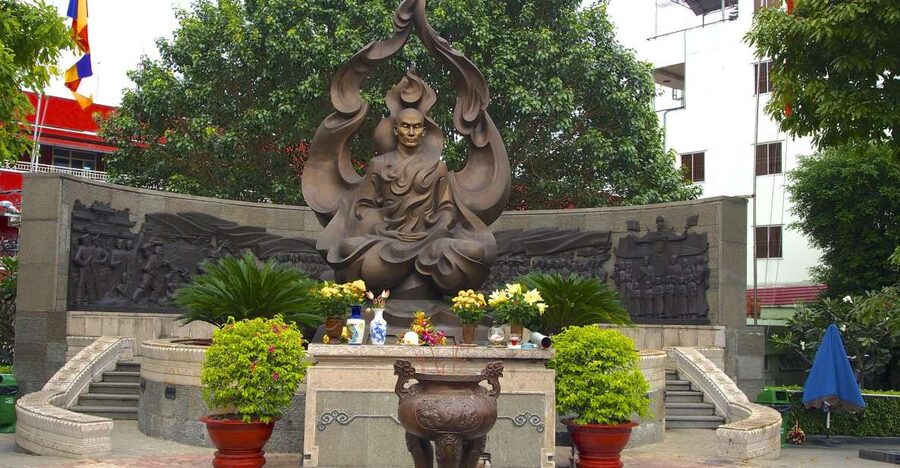
Then you move to the Thích Quang Đức Monument, which honors the famous monk who set himself on fire in 1963 as a protest. That act is one of the most well-known symbols of resistance tied to the period, but seeing it in a city context helps you understand how public memory lives in everyday space.
This part of the tour is where good guidance makes the biggest difference. You want someone who can explain what you’re looking at without turning it into a lecture. Guides on this tour are noted for being sensitive about what war does to a nation and its people, and for helping you connect the past to how people show respect and gratitude now.
If museum topics are emotionally heavy for you, schedule your day knowing you may need a quiet minute afterward. A short break after this stop can help your brain catch up.
The Oldest Apartment Built From Wartime Saigon
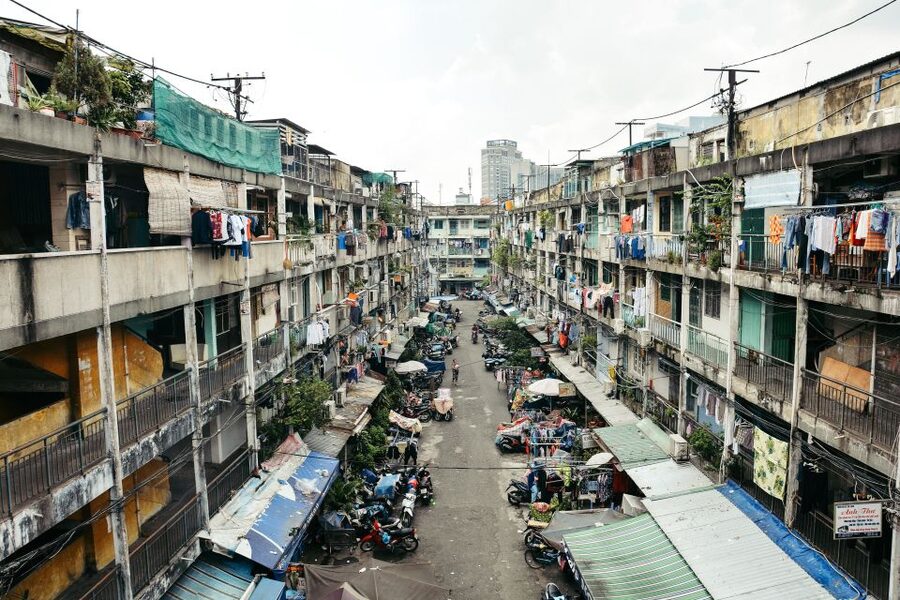
Next comes a stop that’s more lived-in than museum-like: the oldest apartment in Ho Chi Minh City, built from the war. This isn’t presented as a shocking attraction. It’s an opportunity to see how people kept building life even with damage and uncertainty in the background.
You’ll walk through the area and hear stories about what daily living looked like in that setting. For me, this is one of the most valuable parts of the route because it shifts the focus from big events to the normal routines that survived them.
This stop also connects nicely with the earlier war-themed sites. You see the reverence and remembrance at monuments and inside museums, then you see how people continued to exist and adapt in housing.
Flower Market Open Almost 24 Hours: Da Lat Arrivals
When the route reaches the biggest flower market in the city, the mood changes fast. This is where Ho Chi Minh City feels like it’s working even when you’re off sightseeing mode. The flower market started in 1980 and is described as open almost 24 hours a day.
What I like here is the real-world supply chain detail: flowers are transferred from Đà Lạt each morning. That means the market’s look and smell ties directly to another region of Vietnam, not just local growing. You can walk through displays of thousands of flowers and see the sheer variety in person.
If you want a few practical tips:
- Go slowly. Vendors move quickly and you’ll want time to look.
- Bring sunscreen. You can spend longer here than you expect, even if you’re not a flower person.
This is also a great stop for photos of color and texture, plus it’s a reminder that daily commerce is part of the city’s story, not just the monuments.
A 75-Year Coffee Shop and a Method Few Places Use

Right after the flower market, you’ll experience Vietnamese coffee at a 75-year-old coffee shop. The tour emphasizes a particular preparation method used by only three coffee shops in Vietnam, which gives this stop a specific point of difference.
Even if you’ve had Vietnamese coffee before, the value here is the setting and explanation. Coffee shops in Vietnam aren’t just places to drink. They are local social spaces, and the age of the place signals how long this kind of routine has mattered.
If you like tasting small variations, this is a good moment in the tour to slow down and pay attention to how the coffee is made. Also, since the earlier stops are mostly outdoor, the coffee break helps you reset before the ride into Chinatown.
Chinatown and the 300-Year-Old Thiên Hậu Temple
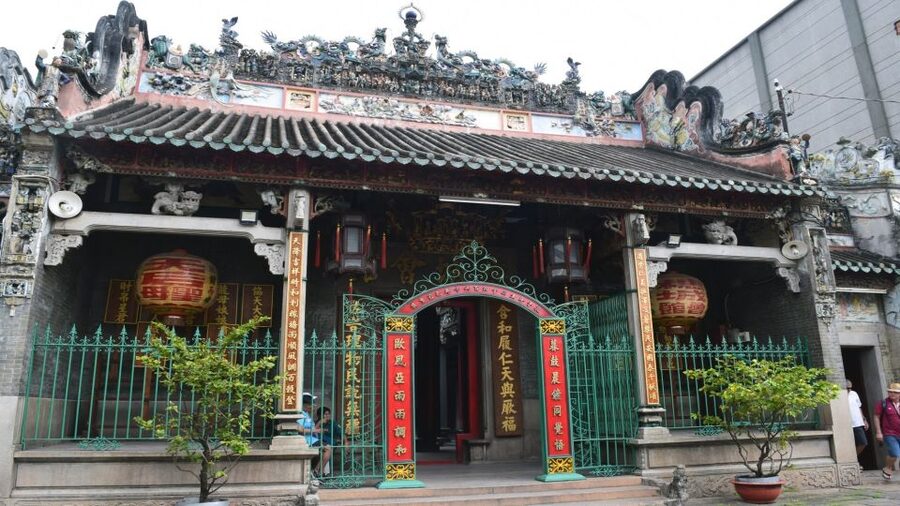
The tail end of the tour brings you to Chinatown, a neighborhood shaped by generations of Chinese-Vietnamese life. The tour description highlights the scale, with about 1.5 million people living there for generations, plus the way markets reflect different needs.
You’ll encounter a motorbike market and a bird market, then finish with a 300-year-old Thiên Hậu temple. Thiên Hậu is a standout because the temple is old enough that it feels woven into the neighborhood rather than placed on it. The tour also frames this as a place where culture shows up in daily routines, not only in special events.
This ending works well because it blends history with street-level life. Museums and monuments can feel distant. Chinatown feels immediate, loud, and real, and it helps the day end on something you can still picture once you’re back at your hotel.
How the Scooter Ride Feels (And Who Should Skip It)
The tour is designed around steady movement through traffic, not around long walks. That can be great if you want to cover ground quickly. It can also be stressful if you hate the idea of balancing on a scooter seat while cars and motorbikes flow around you.
One guide setup can make a huge difference. In the experiences shared, riders repeatedly noted that they felt safe because the driver and guide handled heavy traffic well. Still, your comfort matters most.
You should probably skip this tour if:
- you have back problems or mobility limitations
- you have heart problems
- you need wheelchair access
If you’re generally healthy and comfortable on a scooter, this is a practical way to see a lot without burning your day on transit.
Bring sunscreen and wear shoes that grip. You’ll be on and off the scooter several times, and you’ll want stability as you move around busy stops.
Price and Value: Is $49 Fair for This Much City Time?
At about $49 per person for roughly 4 hours, the value comes from what’s included and what’s packed in. You’re not just buying a couple of museum tickets. You’re getting:
- entrance tickets to the listed attractions
- a helmet and raincoat
- a private driver setup with fluent English
- a live tour guide in Vietnamese and English
- hotel pick-up included
When you try to buy these things separately, the costs add up quickly, and you lose the benefit of having someone coordinate the route while you focus on the sights. This tour also saves time by covering many areas in one run across 8 districts.
The main reason I’d call it a fair price is that you also get a flexible itinerary feel. If a stop clicks for you, the day can slow down. If you want to move on faster, the private nature of the tour helps you manage your time.
Should You Book This Ho Chi Minh Historical Scooter Tour?
Book it if you want:
- a fast, guided way to hit the big historical anchors plus local streets
- a private scooter experience with English support and entrance tickets handled
- a day that mixes museums and monuments with real daily-life stops like flowers and Chinatown
Skip it if:
- you have health or mobility limits that make scooter riding difficult
- you want a slow, walking-heavy sightseeing day
- war-related sites may feel too intense for you without breaks
If your goal is to understand Saigon as a city of stories, not just checklists, this tour gives you a strong mix in a short time.
FAQ
How long is the Ho Chi Minh historical city scooter tour?
The tour lasts about 4 hours.
What time does the pick-up happen?
Your pick-up time is either 8:00 AM or 1:00 PM.
Is this tour private?
Yes. It’s set up as a private tour just for you.
What’s included in the price?
Included are all listed attractions, entrance tickets, a good-quality helmet and raincoat, and a private driver with fluent English. The tour also has a live guide in Vietnamese and English.
Is there an English-speaking guide?
Yes. The live tour guide speaks Vietnamese and English, and the private driver is described as fluent English.
What should I bring?
Bring comfortable shoes, sunglasses, and sunscreen.
Does the tour include helmet and rain protection?
Yes. You get a good quality helmet and a raincoat.
Is the tour suitable for wheelchair users or limited mobility?
No. It’s not suitable for wheelchair users, and it’s also not suitable for people with mobility impairments, back problems, or heart problems.
What places are visited during the tour?
The tour includes the French-material cathedral, the post office (with a 90-year-old hand-written letter-writer), the War Remnants Museum, the Thích Quang Đức Monument, the oldest apartment built from the war, the biggest flower market, a 75-year-old coffee shop, and Chinatown including the 300-year-old Thiên Hậu temple.