REVIEW · MONTEREY
Monterey: 1-Hour GPS Guided Scooter Car Tour
Book on GetYourGuide →Operated by GoCar Tours - San Francisco · Bookable on GetYourGuide
Monterey looks different from a GoCar. You drive a two-seater, open-top scooter car with GPS guidance and an audio narration that calls out major sights as you roll along the coast. I love how the audio guide keeps you oriented without feeling like a lecture, and I love the easy freedom of driving yourself past spots like Cannery Row and the Monterey Bay Aquarium.
One key drawback: it’s not ideal if you have back problems or if you’re not comfortable driving. Also note the age rules for passengers (no car seats), so it may not work for families with very young kids.
In This Review
- Key highlights worth knowing
- Why a GPS GoCar tour works so well in Monterey
- Getting started near Friendly Plaza and Monterey Museum of Art
- Old Monterey stops: Moon Tree, Colton Museum, Casa Serrano, and Plaza del Oro
- Cruise past Sister City Park and San Carlos Beach
- Cannery Row to the Aquarium: Steinbeck Plaza and the Monterey Bay Aquarium area
- Coastal viewpoints and Point Pinos Lighthouse photo runs
- Final stops near Monarch Butterfly Sanctuary, Steinbeck Cottage, and Lovers Point
- Price and value: what $112 per group up to 2 really gets you
- What’s included vs. what you should bring (and what you shouldn’t do)
- Driving rules and comfort notes that affect your day
- Who this tour suits best (and who should pass)
- Should you book the Monterey GPS Guided Scooter Car Tour?
Key highlights worth knowing

- Open-top GoCar freedom: you drive yourself, with the coast doing most of the work for photos
- GPS audio narration: you get guided context while still choosing your pace at each stop
- Iconic Monterey route: Cannery Row, Monterey Bay Aquarium area, and Point Pinos lighthouse
- Photo-friendly viewpoints: Harbor Seal Lookout, Kissing Rock Viewpoint, and Lovers Point murals
- A tight 1-hour format: great if you want highlights without a long walking tour
Why a GPS GoCar tour works so well in Monterey
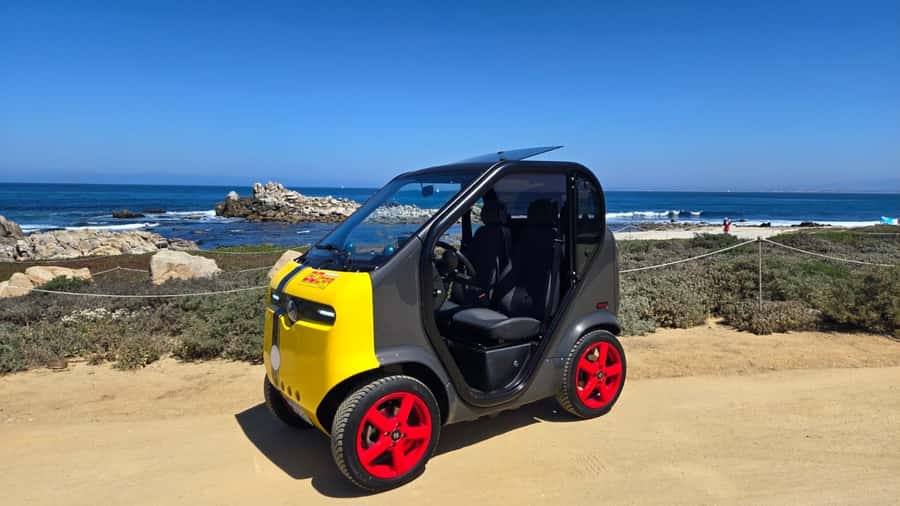
Monterey is built for this kind of outing. You’ve got a compact set of major sights, plus coastline roads where views happen quickly between turns. A 1-hour GoCar format fits perfectly when you want to see a lot without spending half your day in transit or searching for parking.
The GPS system matters because it removes the stress of navigation. Instead of stopping to check your phone, you follow the route and listen as the car talks. That makes the whole drive feel more like a guided loop, not a scavenger hunt.
And because it’s an open-top two-seater, the experience feels more like “you’re here” than “you’re touring.” You can snap photos as you go, and you’ll often get your best ocean views without needing a long walk to earn them.
Getting started near Friendly Plaza and Monterey Museum of Art
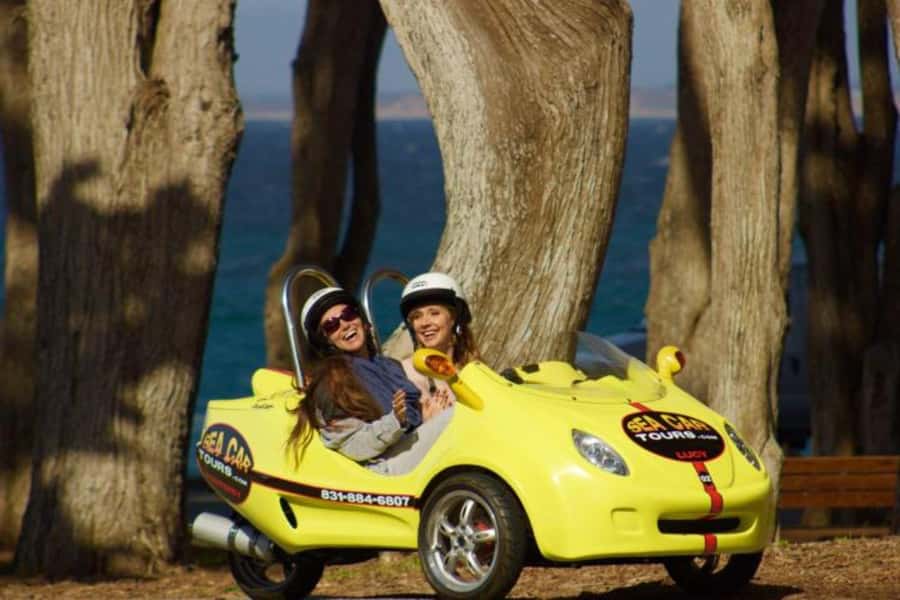
The tour starts near Friendly Plaza, right by the Monterey Museum of Art. That location is handy because it puts you close to the action quickly, so you don’t lose your first minutes figuring out where you’re headed.
From the start, expect the rhythm to be simple: the GoCar guides you with GPS, the audio guide fills in the context, and you’ll have set points where you stop for photos and orientation. In a 1-hour tour, you should treat every stop as quick and purposeful—grab the shot, look around, then move on.
Before you roll out, have your basics ready: your driver’s license (you must be 18+ to drive), comfortable clothes, and sunglasses. If you want the photos to come out well, camera at the ready beats camera buried in a bag.
Old Monterey stops: Moon Tree, Colton Museum, Casa Serrano, and Plaza del Oro
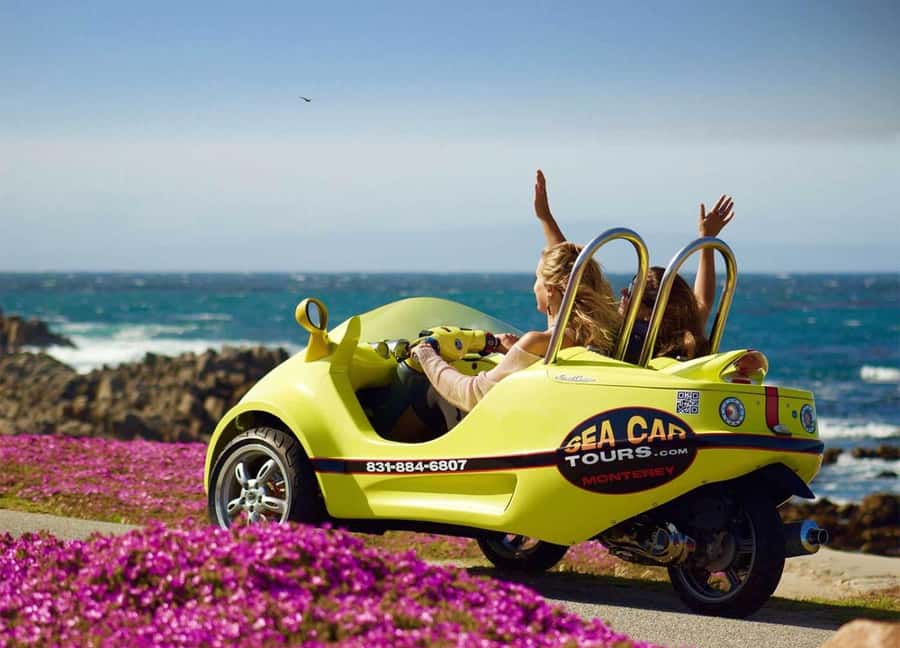
One of the fun things about a GoCar route is how it threads through both famous and slightly offbeat stops. Early on, you pass the Moon Tree, a Monterey oddity that’s worth at least a quick look because it’s the kind of local detail you wouldn’t find on a basic sightseeing list.
You’ll also encounter a string of cultural and historic markers as the audio guide narrates along the way—including the Colton Museum and Casa Serrano. These aren’t just names on a map; they’re the type of places that help you understand what “Monterey” is beyond the shoreline.
Then you’ll roll by the Monterey Mural and Plaza del Oro. The mural works well with a scooter car because you’re moving slowly enough to frame it, but not trapped in a long stop. Think of it as visual wayfinding—Monterey’s personality shows up in these details.
Finally, you get to the Old Whaling Station Adobe. Even if you don’t spend a lot of time on-site during a 1-hour drive, passing it gives you a sense of how the area’s history connects to the coast you’re cruising.
Cruise past Sister City Park and San Carlos Beach
After the older-town feel, the route shifts toward the water with stops that are more about scenery than labels. Passing Sister City Park and San Carlos Beach is a good reminder that Monterey isn’t only about big landmarks—some of the best moments are simple: ocean air, wide water views, and the feel of the shoreline drive.
This is where I like keeping my expectations realistic. In one hour, you won’t linger like you would on a full walking day. Instead, you’ll get visual hits in quick succession, which is exactly what you want for a highlight-style experience.
If you’re traveling with someone who gets bored on long tours, this segment usually keeps things interesting. The views change fast, and you’re constantly moving to the next viewpoint.
Cannery Row to the Aquarium: Steinbeck Plaza and the Monterey Bay Aquarium area
Next up is Cannery Row, and the tour makes sure you hit it in the right way. You stop at the Cannery Row Monument in Steinbeck Plaza, which is one of those “yep, I’m here” moments. It’s also a useful photo anchor because it tells you you’ve arrived at Monterey’s most famous stretch.
From there, the route passes the Monterey Bay Aquarium. You don’t need a timed ticket or a long visit to appreciate why this place draws crowds. Even just driving past gives you the location context: it sits right at the heart of the coastline scenery you’re already experiencing.
This part of the tour is valuable because it links pop culture to place. Monterey Bay Aquarium and Cannery Row aren’t random stops—they explain why the coast, the harbor, and the area’s energy fit together. The audio narration helps you make those connections while you drive.
Practical tip: slow down your photo-taking plan here. If the lines are busy on foot, you still can get great shots from the scooter car viewpoint areas. Just don’t get too focused on your camera while traffic and pedestrians are near.
Coastal viewpoints and Point Pinos Lighthouse photo runs
The best part of the GoCar experience often comes when you shift from city streets to lookout mode. The tour wraps with standout view stops including Harbor Seal Lookout, Lovers Point Mural in Berwick Park, and Kissing Rock Viewpoint.
Each one does a slightly different job:
- Harbor Seal Lookout helps you look outward, not just at buildings
- Lovers Point Mural adds color and local vibe to your photos
- Kissing Rock Viewpoint gives you that classic Monterey “coastline drama” angle
Then you’ll reach Point Pinos Lighthouse. A lighthouse stop is smart in a time-limited tour because it compresses scenery into a single, memorable payoff. You’re likely to remember the shape of the coast after seeing this area.
Because it’s a driving-and-stopping format, I recommend you treat these stops like short photo sessions. Walk a little if it feels safe and clear, but don’t plan long hikes. Your next viewpoint comes soon, and the tour is built to keep the momentum.
Final stops near Monarch Butterfly Sanctuary, Steinbeck Cottage, and Lovers Point
The tour doesn’t end with just ocean views. It also threads in Monterey’s softer, more personal attractions, including the Monarch Butterfly Sanctuary and the John Steinbeck Cottage.
That combo works well because it gives you more than scenery. The butterfly sanctuary adds a calmer, nature-focused pause, while Steinbeck’s cottage connects Monterey to a writer who basically helped shape the way people feel about the place.
You’ll also pass by the Pacific Grove Museum of Natural History and Lovers Point. Those stops create a nice arc: coastline, viewpoint energy, then culture and nature in smaller doses. It’s a good way to leave with more than one kind of memory.
If you’re the type who likes to end a day with one last good view, Lovers Point often does that job. If you prefer a final dose of “place and story,” the Steinbeck connection helps you land the tour on a meaningful note.
Price and value: what $112 per group up to 2 really gets you
The price is $112 per group up to 2 for a 1-hour ride. That setup can feel pricey if you’re traveling solo. But if you’re splitting with a partner or friend, it becomes a strong value because you’re effectively buying two guided driving experiences in one.
What you get included is also straightforward: GoCar rental, GPS-guided tour, and a helmet. In other words, you’re not paying extra for the core method—navigation and the talking guide are part of the package.
There’s also optional CDW insurance for $12 (not included). If you’re the type who likes peace of mind, you’ll likely consider it. If you’re already covered through other means, you might skip it. Either way, it’s good to decide before you arrive so there’s no last-minute pressure.
For me, the value comes from saving time and effort. You see major Monterey highlights in one go, and the GPS audio helps you understand what you’re seeing while you drive. That’s harder to replicate if you’re navigating on your own, especially in a time-tight schedule.
What’s included vs. what you should bring (and what you shouldn’t do)
Included items are simple and useful. You get the GoCar, the GPS-guided tour, and a helmet. That means you only need to focus on your own comfort and safety.
Bring:
- Driver’s license
- Sunglasses
- Camera
- Comfortable clothes
Don’t do:
- Smoking
The practical takeaway is that this tour is designed to be easy to join. You don’t need special clothing or gear. Just dress for a breezy coast ride and have your glasses ready because wind plus glare can be real.
Driving rules and comfort notes that affect your day
You must be over 18 with a valid driver’s license to drive the Sea Car/GoCar. Passengers can be as young as 4 years old, but the important catch is that there are no car seats, so anyone younger than the minimum isn’t permitted.
Also, this isn’t suitable for people with back problems. Even if you’re willing to try, you should take that warning seriously. A scooter car tour is active, with road vibration and a posture that might not work for you.
The small-group format is another practical plus: the tour is limited to 2 participants. That usually makes the experience feel smoother and gives you more space to manage your stops and photos without crowding.
Who this tour suits best (and who should pass)
This is a great fit if you want Monterey highlights in a tight window and you like hands-on sightseeing. I think it’s especially good for couples, friends, and anyone who doesn’t want to commit to a long walking day.
It also works well for people who enjoy photo stops but dislike spending hours driving from one parking spot to another. The GoCar route is built to keep you moving through the best-known areas and a few more distinctive stops like Moon Tree and Harbor Seal Lookout.
You should pass if:
- you have back problems
- you’re traveling with a small child who needs a car seat
- you’re not comfortable driving your own vehicle for the full hour
If you’re on the fence, ask yourself a simple question: do you enjoy driving and want the freedom to stop for photos when the route cues you? If yes, this tour will likely feel like a fun upgrade to a basic sightseeing loop.
Should you book the Monterey GPS Guided Scooter Car Tour?
Book it if you want a 1-hour Monterey “greatest hits” that still feels active and personal. The GPS audio does real work here—it keeps the story going as you drive past places like Cannery Row, the Monterey Bay Aquarium area, Point Pinos Lighthouse, and Kissing Rock Viewpoint.
Skip or reconsider if you need long stops, car-seat seating, or you have mobility and comfort concerns like back pain. And if you’re solo, run the math: $112 is per group up to 2, so splitting the cost helps the value land better.
If you’re aiming for an efficient, photo-friendly day in Monterey with a bit of freedom built in, this one is a solid choice.