REVIEW · MUNICH
Munich: Top Sights Guided E-Scooter Tour
Book on GetYourGuide →Operated by Firewheels Tour GmbH · Bookable on GetYourGuide
Two hours, Munich goes zoom. This guided e-scooter route is a fun way to see a stack of landmarks without spending your whole day on transit or queues. I like that you start with hands-on riding basics so you’re not fumbling once the sightseeing begins.
What makes it work is the people running it and the way the story is built into the route. Guides like Munir and Abdel (and yes, Karl and Yousuff get mentioned too) talk history and Bavarian kings while you move between big sights and calmer park moments.
One thing to consider: it’s still city driving. You may have to cross or merge through busier streets at times, and if you’re craving a slow, museum-style deep history lesson, the 2-hour format can feel a bit fast.
In This Review
- Quick hits before you book
- Two Hours, One Smart Route: Munich on an E-Scooter
- Learning the E-Scooter Rhythm: Safety Before You Roll
- Hofgarten and Ludwigstrasse: Where the City Looks Most Like a Postcard
- Friedensengel and the English Garden: Nature Stops That Actually Feel Like a Break
- Königsplatz and Odeonsplatz: Squares Where Bavarian Power Shows Up in Plain Sight
- Frauenkirche and Theatinerkirche: Church Stops You Can Appreciate Even in Motion
- Residenz and Oper: The Royal-City Center in One Guided Pass
- Siegestor and Eisbachsurfer: The Quirky Munich Moments You’ll Remember
- Guides Matter: Karl, Munir, Yousuff, and Abdel Set the Tone
- Price and Value at $76: When This Tour Makes Financial Sense
- Who Should Book (and Who Should Skip)
- Should You Book This Munich E-Scooter Tour?
- FAQ
- How long is the Munich Top Sights guided e-scooter tour?
- How much does the tour cost?
- What landmarks and areas will you see?
- Do you get help learning to ride the scooter?
- What languages are the live guides?
- Is the tour suitable for children?
- Is it suitable for pregnant women?
- What is the cancellation policy?
Quick hits before you book
- E-scooter learning first: you get taught and have a test run so you can focus on the sights
- English Garden plus royal landmarks: nature breaks up the heavier architecture stops
- Frequent stops for real viewing: you’re not trapped just gliding past everything
- Guide storytelling matters: strong guides like Munir and Abdel turn sights into context
- Busy-street crossings are part of the route: plan for short bursts of traffic stress
Two Hours, One Smart Route: Munich on an E-Scooter
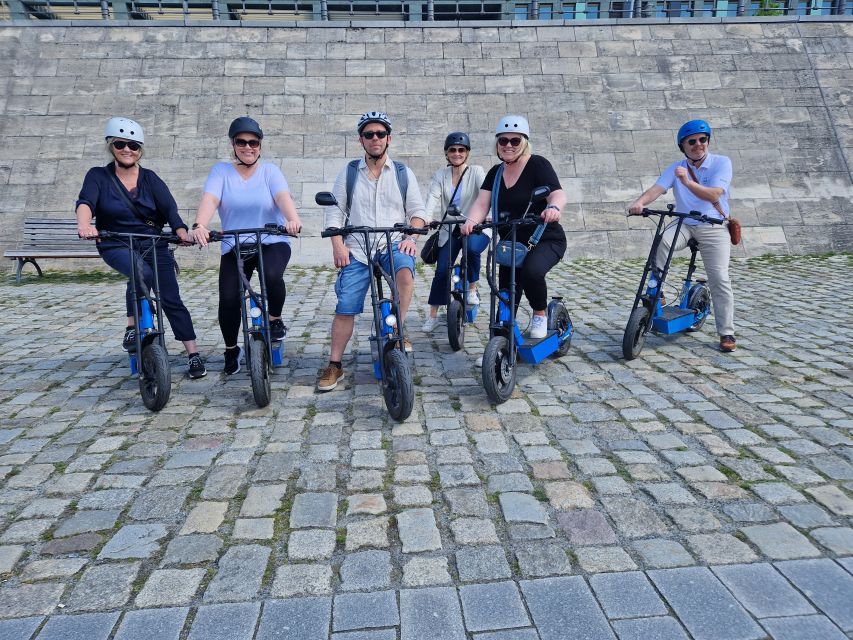
A Munich highlight tour can turn into a checklist slog. This one tries to solve that with speed plus structure: you’re on an e-scooter, but you’re not just racing around. In 2 hours, you’ll hit multiple districts and iconic backdrops, including the English Garden area, major squares, and several major landmark corridors.
The practical value is simple: if you have limited time, an efficient loop lets you build a mental map of the city fast. And when you later go back on your own, you already know what’s where. That’s especially useful around central Munich, where sights cluster but walking long distances between them can be tiring.
The other payoff is variety. Your route is a mix of formal “palace and church” Munich and calmer “Isar/park” Munich. That pacing helps the tour feel like a sightseeing day condensed, not one long street corner.
Learning the E-Scooter Rhythm: Safety Before You Roll
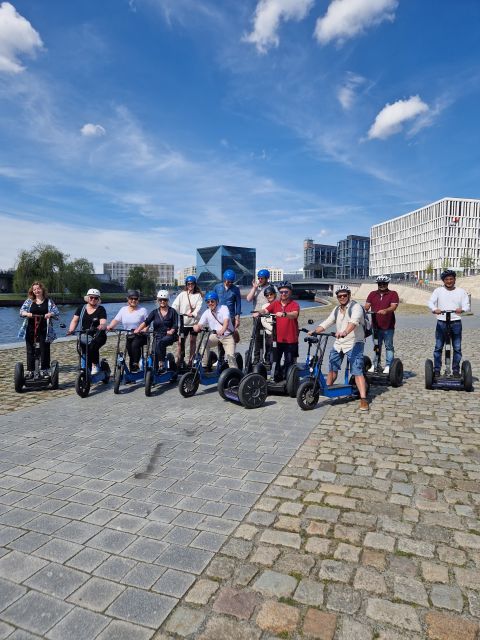
Before you head out, you get instruction on how to ride safely and how to feel comfortable on the vehicle. The tour isn’t presented as a pure adrenaline thing; it’s set up as a guided city experience with teaching built in.
In the same spirit, the better guides are the ones who slow you down at the start. People describe being shown how it works, given a chance to practice, and then only rolling into the route when everyone feels ready. If it’s your first time on anything like this, that comfort-first approach matters. It lowers the stress level so the landmarks are the main event.
Here’s your planning thought: you’ll want to be mentally ready for tight turns and changing surfaces in a city setting. The tour format assumes you’ll listen, follow instructions, and stay alert when the group approaches intersections.
Hofgarten and Ludwigstrasse: Where the City Looks Most Like a Postcard
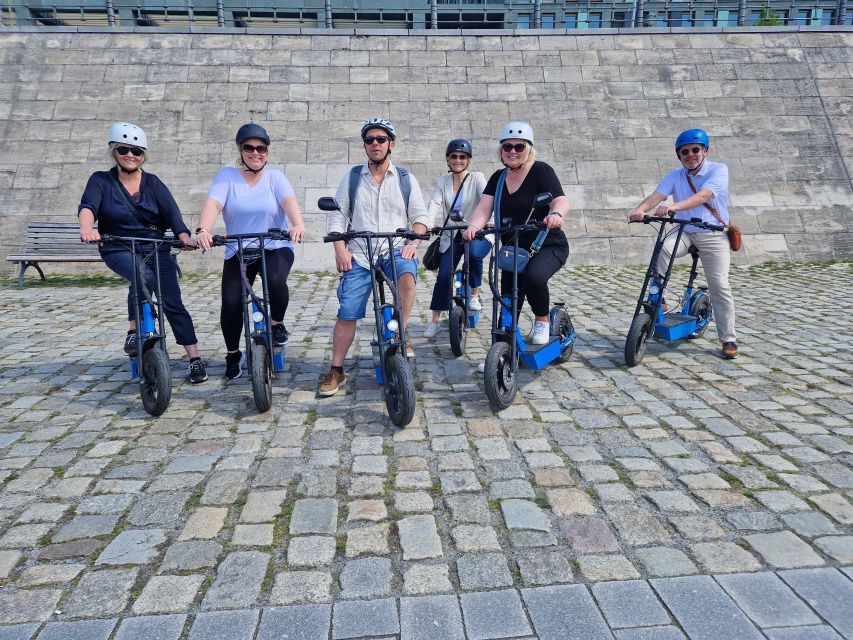
Early on, you spend time around Hofgarten and the grand avenue feel of Ludwigstrasse. This is Munich’s “big-city design” side, with wide views and prominent façades that make it easy to understand why this area has long been staged for public life.
Why I like this part of the route: it’s visually readable from a moving scooter. You see how streets align, where major buildings command attention, and how parks interrupt the urban grid. It also sets up the tour’s balance—formal architecture first, then a shift toward the softer green spaces later.
The only drawback is also the nature of this kind of driving: these are popular sightseeing zones. Expect occasional slowdowns near busy areas, and keep your eyes up for crossing points. If you’re the type who hates waiting, bring patience for a few short pauses while the group regroups.
Friedensengel and the English Garden: Nature Stops That Actually Feel Like a Break

This tour leans hard into the English Garden region, and that’s a smart move. Munich’s parks aren’t just background scenery—they’re places you notice while you’re there, and your scooter route keeps that feeling intact.
A key stop is Friedensengel, a monument you’ll see in the context of the park setting rather than as an isolated photo spot. The point isn’t just pictures; it’s how the landscape around it changes the mood. One moment you’re in city sights, and the next you’re in a calmer zone that feels built for strolling.
Then you move toward the Chinesischer Turm area and the Biergarten am Chinesischen Turm zone. Even without lingering for a long meal, you get the atmosphere: the sense that this is one of Munich’s defining social spaces. It’s also where the tour becomes more than architecture. The air feels different, the soundscape shifts, and the route gives you a breather from the heavy stone landmarks.
Practical tip: if your ideal vacation day is mostly walking and slow stops, you might want extra time after the tour. The scooter format is great for orientation, but it won’t replace a long linger in a park biergarten setting.
Königsplatz and Odeonsplatz: Squares Where Bavarian Power Shows Up in Plain Sight
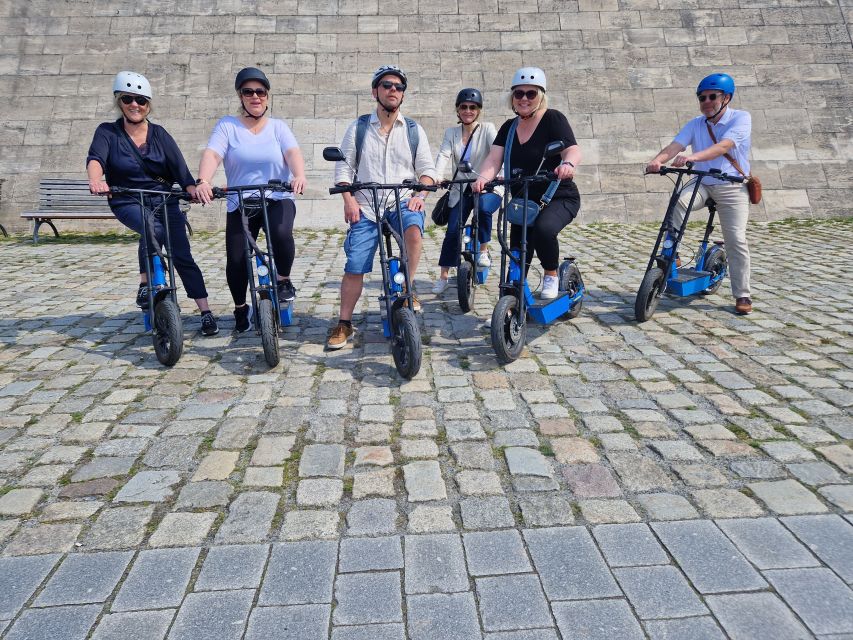
As you head through central zones, you’ll see Königsplatz and Odeonsplatz—two places that instantly read as “this is where important things happened.” These squares are the kind of spaces that make history feel physical, because buildings face inward and the scale is meant to impress.
This is also where the guide storytelling really pays off. The best tours don’t just point at buildings; they connect what you’re seeing to the big themes of Bavarian life—especially the narratives tied to Bavarian kings. When the guide explains these landmarks as part of a larger story, the tour clicks into place. Instead of seeing random monuments, you see how the city expresses power, faith, and civic identity in stone.
One thing to keep in mind: squares can attract crowds. Your group will likely pause to regroup and view from a safe spot, and you might wait a moment while others catch up. It’s not a dealbreaker, but it does affect the tempo.
Frauenkirche and Theatinerkirche: Church Stops You Can Appreciate Even in Motion
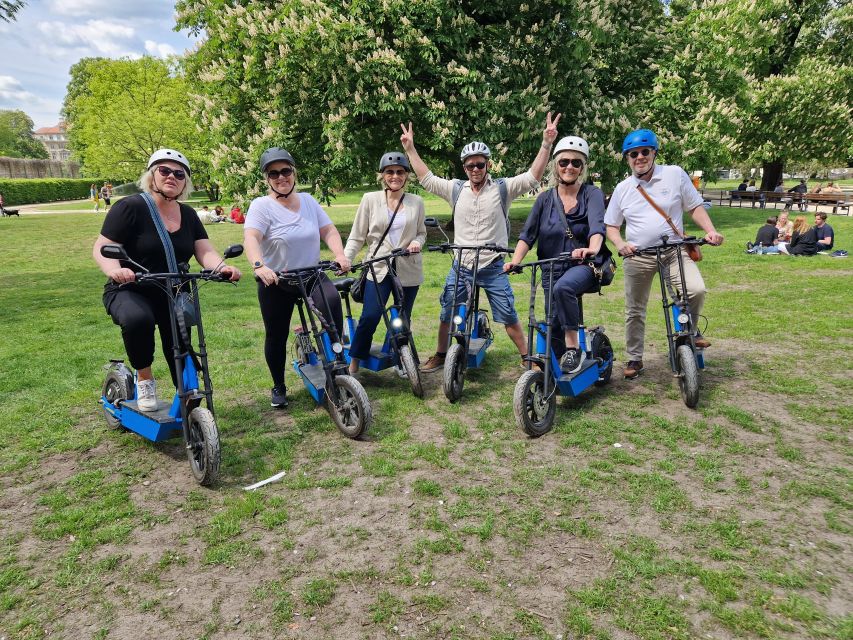
You’ll also pass by or stop near Frauenkirche and Theatinerkirche. Churches sound like “yet another stop” on paper, but the way they’re experienced matters. On a scooter route, you get a quick sense of scale and style, and then your guide can give the context that makes the details meaningful.
What I like about including churches on this kind of tour: they act like anchors. When you’re zooming between different kinds of sights, a major church building helps your brain organize what you’re seeing. It also helps explain the city’s cultural priorities—where religious architecture fits alongside royal and civic sites.
If you’re looking for a deep interior visit, this probably isn’t that kind of tour. But as an exterior-orientation experience, it works well because you can actually cover multiple major buildings in limited time.
Residenz and Oper: The Royal-City Center in One Guided Pass
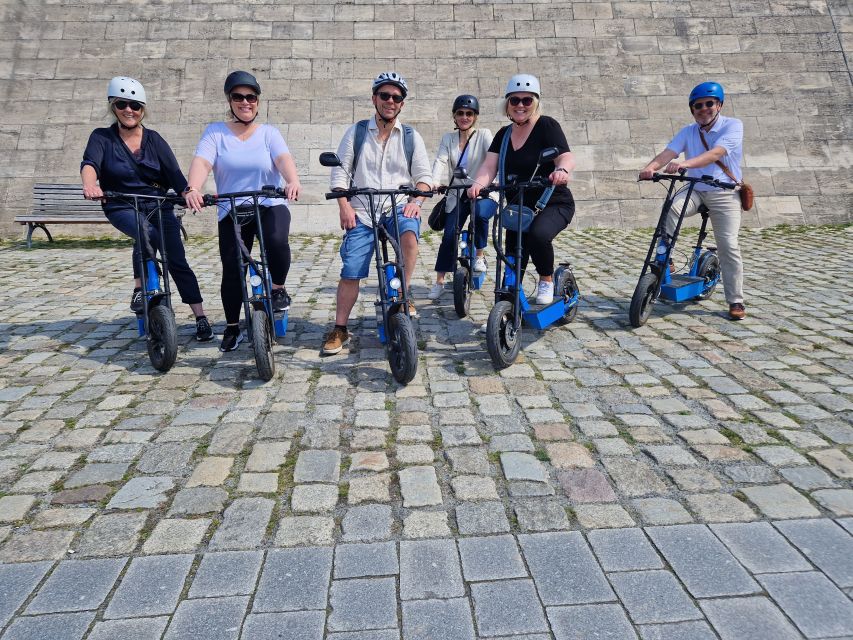
The route includes the Residenz and the Oper area. Think of this section as Munich’s “big institutions” zone. These are the landmarks people imagine when they think of grand European capitals—serious architecture, major public presence, and a distinct sense of historical weight.
The value here is less about reading every detail and more about getting your bearings. In two hours, you’re not going to slow down enough for a full deep-dive into every façade. Instead, you’re building a map in your head. Later, when you choose to return, you’ll know what pulled you in.
If you’re someone who prefers to understand the city through stories rather than strict facts, this portion can feel rewarding. The guides are specifically framed around history telling, including the Bavarian royal angle, so you’re primed to connect what you see to why it was built and how it fits into the broader picture of Munich.
Siegestor and Eisbachsurfer: The Quirky Munich Moments You’ll Remember
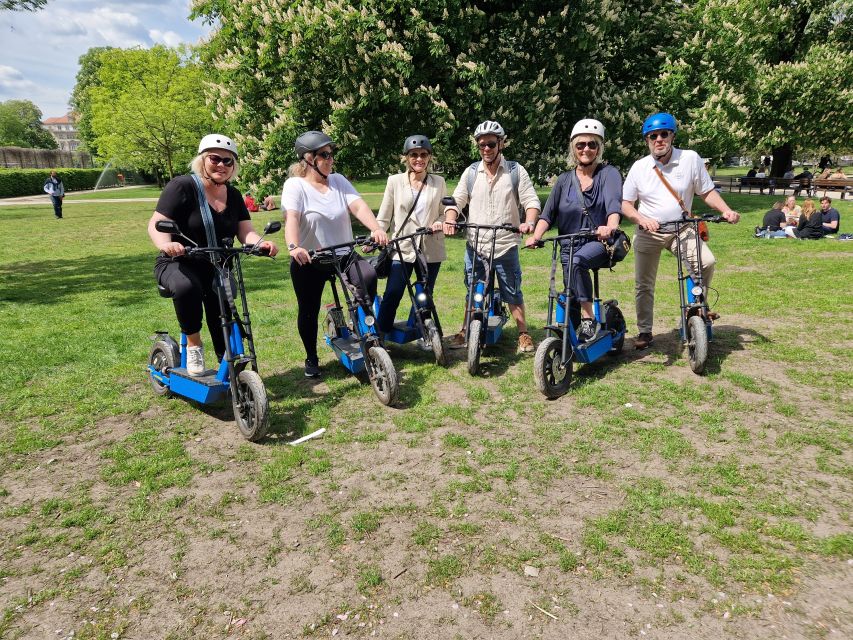
One of my favorite types of stops on any city tour is the one that feels local. That’s where Siegestor and Eisbachsurfer come in.
Siegestor offers a “gateway/monument” feel, and it’s the kind of landmark you can spot even when you’re moving. Then Eisbachsurfer gives you a very different vibe. Instead of royal squares and formal avenues, this is one of those Munich moments that feels distinctly “only here.”
Even if you’re not there at the perfect time to watch action, you still get the context of why people talk about this spot. It’s a contrast that prevents the tour from becoming only architecture appreciation. You leave with at least one memory that isn’t purely about buildings.
Guides Matter: Karl, Munir, Yousuff, and Abdel Set the Tone
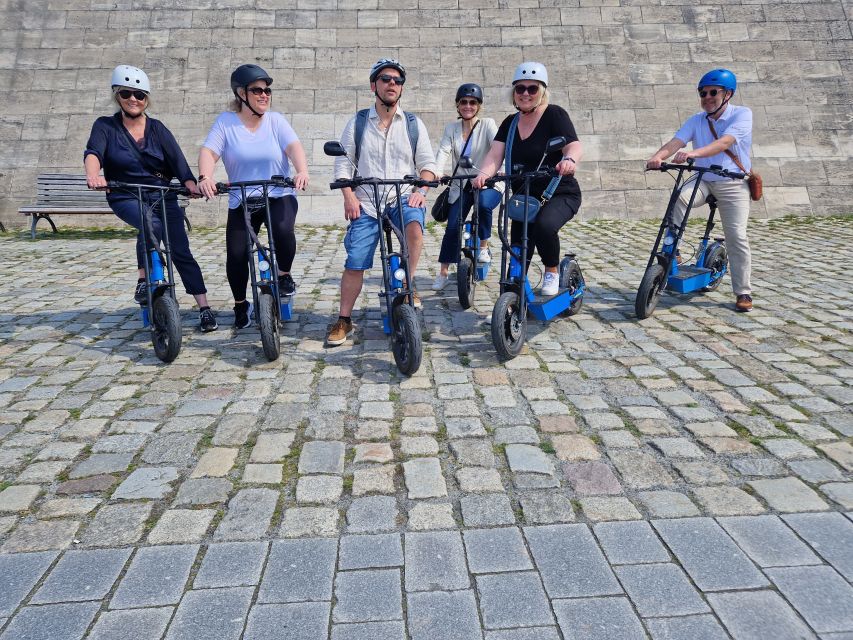
The highest praise in the feedback is about the guides. And that makes sense. On a scooter tour, you’re moving through several areas and stopping at multiple points. If the guide can’t connect the dots, the tour turns into a series of quick peeks.
The strong guides described in the experience include:
- Munir, praised for background knowledge, being attentive, and a route that blends nature and history well
- Abdel, praised for patience and empathy during the riding start
- Karl, praised for going well with passengers’ needs
- Yousuff, praised for organization and friendly presence
Another smart detail is the guidance to get off briefly so you can experience places rather than only viewing them from the scooter. That small freedom changes how the stops feel. You can actually look, take in the space, and absorb the surroundings.
Now for the fair caution: not every experience is perfect. One concern raised was that a guide may not know every part of Munich as well as expected, leading to more difficult crossings through busier roads. This doesn’t mean the tour is unsafe, but it does highlight what you should value most: a guide who manages traffic thoughtfully and keeps the group together.
Price and Value at $76: When This Tour Makes Financial Sense
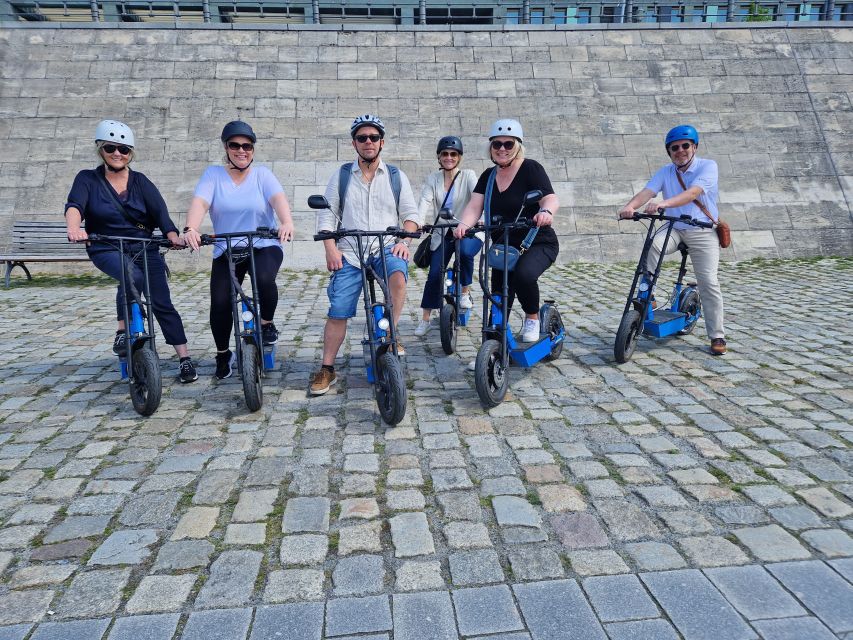
At $76 per person for a 2-hour guided e-scooter tour, the value hinges on three things: time saved, guidance quality, and coverage.
First, you’re compressing a lot of sightseeing into one set route. If you’ve got just a day or a half-day in Munich, paying for an organized loop can be cheaper than adding taxis or losing precious hours on inefficient transport between far-apart sights.
Second, the guide isn’t just walking you around. You’re getting commentary aimed at history and Bavarian royal stories. When the guide is strong, that interpretation turns the landmarks into something you can carry with you later.
Third, the ride itself is part of the product. Seeing places on foot is great, but an e-scooter adds speed and a wind-in-your-face sense of momentum. On a day with good weather, that matters.
So is $76 worth it? For most people using Munich efficiently, yes—especially if you want orientation plus memorable scenery without planning a complex self-guided route.
Who Should Book (and Who Should Skip)
This tour is a good fit if you:
- want to cover top Munich sights in a short window
- enjoy guided stories and background explanations while you move
- like mixing formal landmarks with park time
- are okay with riding an e-scooter in a city environment
It’s not for everyone. The activity is not suitable for children under 14 and not suitable for pregnant women, based on the tour’s guidelines. Also, if you’re someone who strongly prefers long quiet stops and lots of walking, the 2-hour structure might feel too short for your style.
And one more practical thought: if traffic stress is a big deal for you, be aware that routes in central Munich can include busier street crossings. The better guides manage this smoothly, but it’s still part of the city reality.
Should You Book This Munich E-Scooter Tour?
If you want a fast, guided way to see major Munich highlights—especially English Garden scenery plus central landmarks—this is a strong candidate. The best version of this tour is guided by someone attentive and story-focused, with enough stop-and-look moments to make the sights feel real, not rushed.
I’d say book it if your priority is efficient orientation and a mix of architecture and park energy in one afternoon. Skip it if you’re chasing a slow, deep, museum-grade history experience or if you know you’ll struggle with the practical side of scooter riding in a live city setting.
Overall, with a 4.1 average rating from 35 reviews and consistent praise for guides and route balance, it’s the kind of tour that often works best when you’re open to movement and happy to learn while you go.
FAQ
How long is the Munich Top Sights guided e-scooter tour?
The tour lasts 2 hours.
How much does the tour cost?
The price is $76 per person.
What landmarks and areas will you see?
You’ll visit top sights including Hofgarten and Ludwigstrasse, plus stops such as Friedensengel, the English Garden area (including Chinesischer Turm and the biergarten zone), Königsplatz, and major central sites like Odeonsplatz, Frauenkirche, Theatinerkirche, Residenz, Oper, Siegestor, and Eisbachsurfer.
Do you get help learning to ride the scooter?
Yes. The tour includes instruction on safe riding and time to get comfortable before you head out for sightseeing.
What languages are the live guides?
The live tour guide is available in German and English.
Is the tour suitable for children?
No. It is not suitable for children under 14.
Is it suitable for pregnant women?
No. It is not suitable for pregnant women.
What is the cancellation policy?
You can cancel up to 24 hours in advance for a full refund.