REVIEW · ATHENS
Athens: Award-Winning Acropolis Guided e-Scooter Tour
Book on GetYourGuide →Operated by Wheelz Fat Bike Tours Acropolis · Bookable on GetYourGuide
Silent wheels, loud history. This Athens Acropolis e-scooter tour uses quiet electric scooters and bikes to get you past the usual bottlenecks while your guide turns major landmarks into real stories. I especially loved the easy start and controlled riding—the training at Wheelz (behind the Acropolis Museum) makes it feel approachable fast—and I also loved how guides like John and Evan keep the history clear, friendly, and connected to what you’re actually seeing.
One consideration: you’ll see the big sites from the outside and stop for short looks and photos, not tickets-and-indoor time at the Acropolis or museums. If you’re dreaming of going inside the Parthenon area or doing a full museum visit, plan those separately.
In This Review
- Key things that make this Athens scooter tour worth it
- Meeting behind the Acropolis Museum: get comfortable fast
- The ride style: quiet scooters, fewer headaches, better views
- First history stops: Odeon of Herodes Atticus and Areopagus Hill
- The Acropolis approach: secret vantage points and the “think like” moments
- National Observatory, Agia Marina, and the Thiseio neighborhood flavor
- Temple of Hephaestus and the mid-tour cool-down
- Flea market break in Thissio: eat, stretch, and reset
- Entering the Acropolis zone: short visits, big-picture meaning
- Photo stops that help you read the ruins
- What you actually get in two hours (and why the timing works)
- Price and value: why $69 can make sense
- Safety, comfort, and who should skip it
- Do you get enough history, or is it just a fun ride?
- Should you book this Athens Acropolis e-scooter tour?
- FAQ
- Where is the meeting point for the Wheelz Acropolis e-scooter tour?
- What’s included in the tour price?
- Are Acropolis tickets included?
- How long is the tour?
- What language is the tour guide?
- What should I wear or bring?
- Is the tour suitable for everyone?
- What happens during the tour?
Key things that make this Athens scooter tour worth it
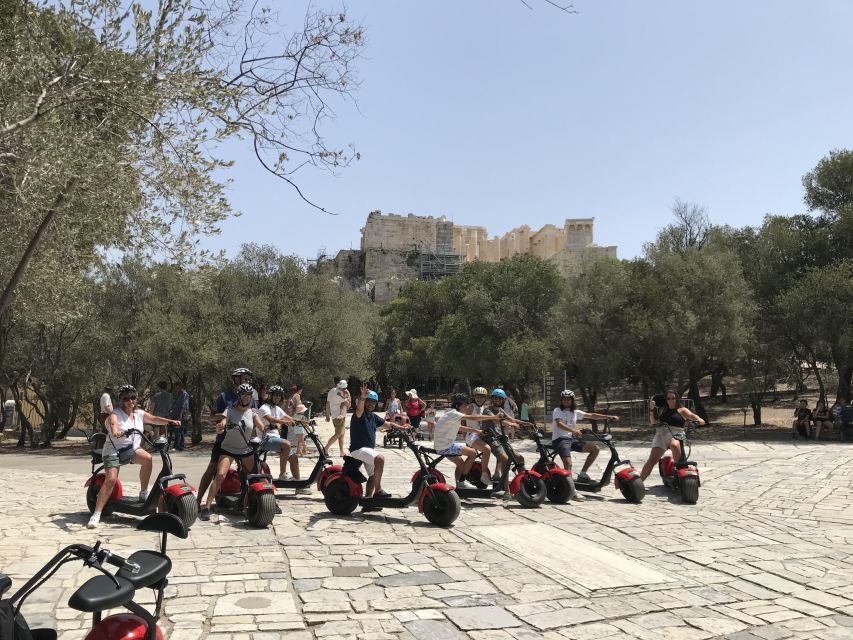
- Behind-the-scenes-friendly meeting point: Wheelz Fat Bike Tours is at Chatzichristou 6A, behind the Acropolis Museum, easy to spot with the green logo and red scooters.
- Pedestrian-area riding: You mostly stay on car-free lanes and off-road paths, so the ride feels calmer than you might expect near the Acropolis.
- Stops that teach, not just pose: You pause at places like Odeon of Herodes Atticus, Areopagus Hill, Pnyx, and Temple areas, then get story context on the spot.
- A real break built in: You cool down with water and juice, plus there’s a break that includes the Thissio flea market area.
- Great for heat and limited time: In two hours you cover far more ground than a walking-only plan, especially when Athens weather gets intense.
- Guides you’ll want to ask questions to: Many guides (including John, Venice, and Giannis in the lineup) are local-focused and happy to answer what you notice.
Meeting behind the Acropolis Museum: get comfortable fast

Your tour starts at Chatzichristou 6A, at Wheelz Fat Bike Tours Acropolis, right behind the Acropolis Museum. It’s only a couple blocks from the Acropolis Metro Station, and the shopfront is designed to be easy to find: look for the big green Wheelz logo and the red scooters.
Before you go anywhere, you’ll get a safety briefing and a hands-on practice. This matters more than people think. If you’ve only ridden a bike casually, a quick lesson plus time to feel the scooter’s balance turns nervous energy into smooth cruising for the rest of the tour.
You also get your ride essentials up front: a helmet, plus water and other cooling help during the route. That small “ready to go” feeling makes the next parts feel effortless rather than stressful.
The ride style: quiet scooters, fewer headaches, better views
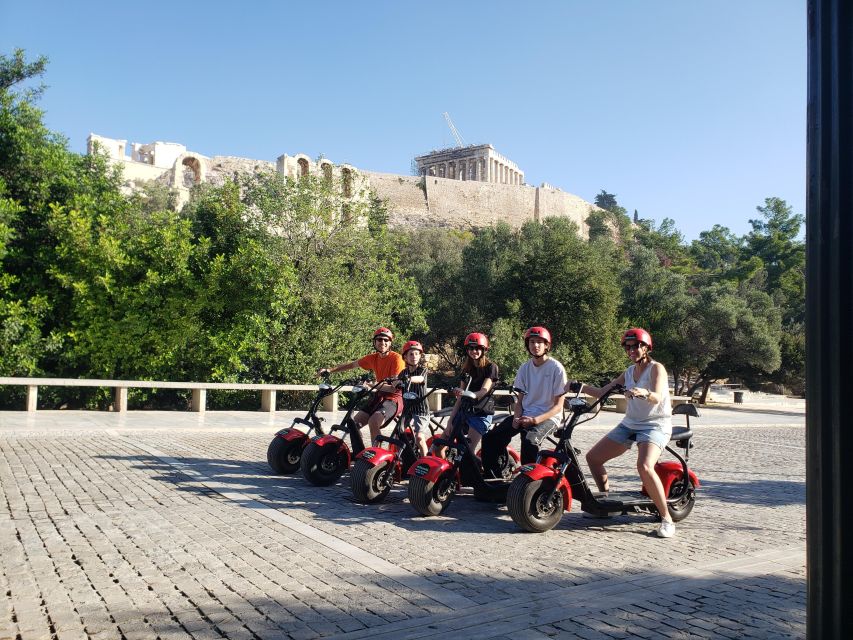
The big selling point here isn’t just that it’s electric. It’s how they structure the movement around the Acropolis area. You’ll ride in pedestrian zones and calmer routes, which keeps you away from the chaotic driving you’d worry about when you picture Athens traffic.
The scooters (and bikes) are designed to be stable and easy to learn. Reviews consistently mention that once you get going, it feels natural, even for people who were initially unsure. That’s a huge deal for older travelers, families with teens, and anyone who doesn’t want to spend half a day walking uphill.
And because it’s mostly pedestrian-area riding, you get a nicer sightseeing experience. Instead of constantly weaving through crowds while trying to take photos, you can actually look at the buildings, read the “why” behind the ruins, and stop where it makes sense.
First history stops: Odeon of Herodes Atticus and Areopagus Hill

Right away, you shift from modern street level into classic Athens storytelling. One of the earliest major stops is the Odeon of Herodes Atticus, and the guide uses it as a doorway into how Greek performance, public life, and architecture fit together.
From there, you’ll head toward Areopagus Hill, another spot with strong “idea history.” This is one of those areas where you can’t just see ancient stones; you’re meant to understand the cultural role the place played. The tour leans into themes like civic debate and philosophical thinking, so your stops feel connected instead of random.
What I like about these early pauses is that they help you build a mental map quickly. After a short explanation, the next viewpoints make more sense, so you’re not just taking photos—you’re recognizing what you’re looking at.
The Acropolis approach: secret vantage points and the “think like” moments
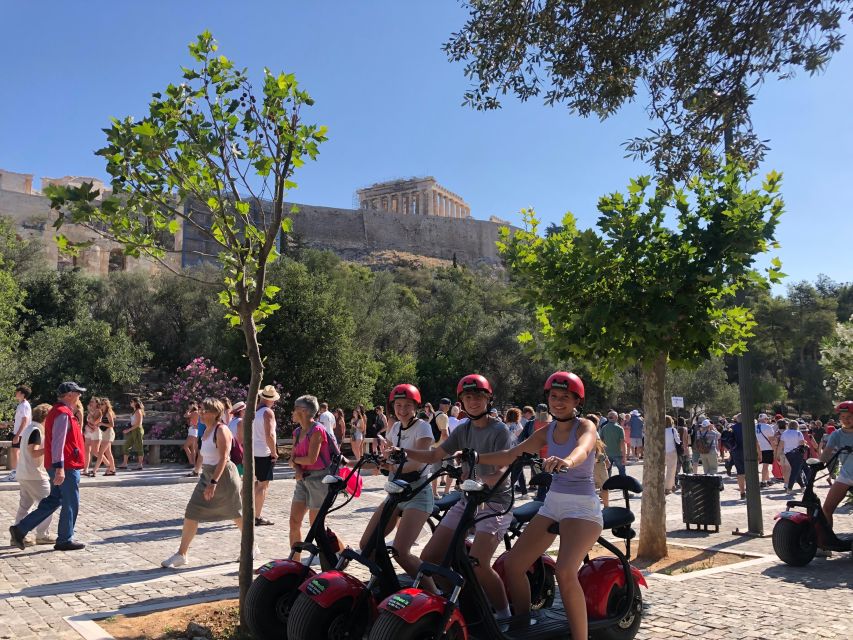
A standout part of the experience is that it doesn’t feel like a simple line of monuments. There’s even a secret stop along the way with scenic views, which means you’re not just bouncing from the same obvious photo spots everyone else uses.
Expect more than big-name ruins. You’ll also hear story threads that encourage you to “think like” ancient philosophers and civic leaders. The guide frames this around the places you’re physically near—so when you look out at the landscape, it’s not just scenery. It’s the same kind of mental landscape ancient Athenians shaped.
This is also where the guided format really helps. You’re moving, but you’re still learning why these sites mattered. If you’ve done a few self-guided Acropolis visits where you felt like you were speed-reading labels, this tour gives you the missing context in a way that sticks.
National Observatory, Agia Marina, and the Thiseio neighborhood flavor
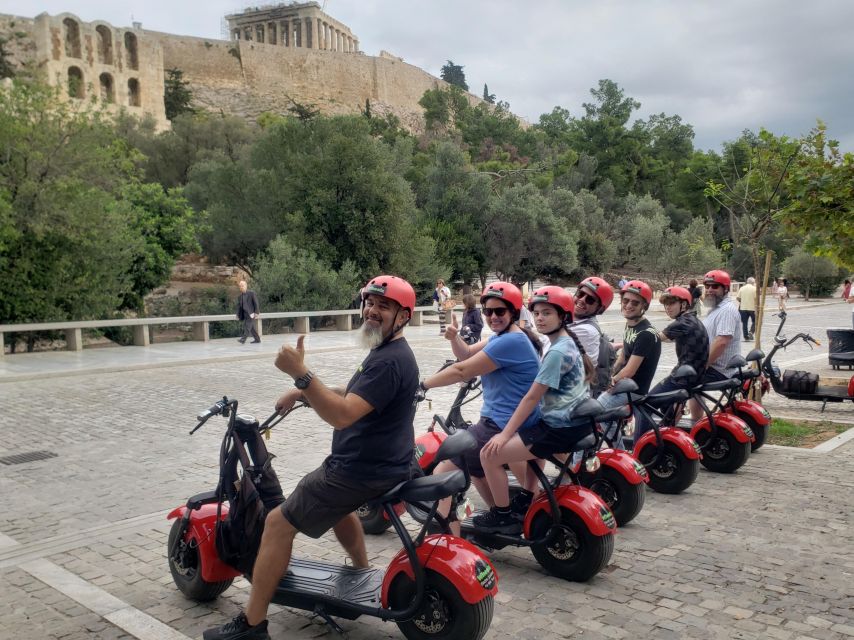
Next comes the National Observatory of Athens area. Again, the value is in the framing. You see why the location is part of the broader city story—not just a random hill stop.
You’ll also pass Church of Agia Marina, and the tour threads you through the older neighborhoods around the Acropolis. One part I found practical: riding gives you a break from the “stop-and-start uphill walking” experience, yet you still get street-level views of how Athens sits beside its ancient layers.
Then you roll into Thiseio, a neoclassical neighborhood where the tone shifts. The guide points out what to notice and, importantly, gives you ideas for food and coffee after the tour. This is a smart touch because it turns sightseeing into a plan for the rest of your day rather than ending with just a route recap.
Temple of Hephaestus and the mid-tour cool-down
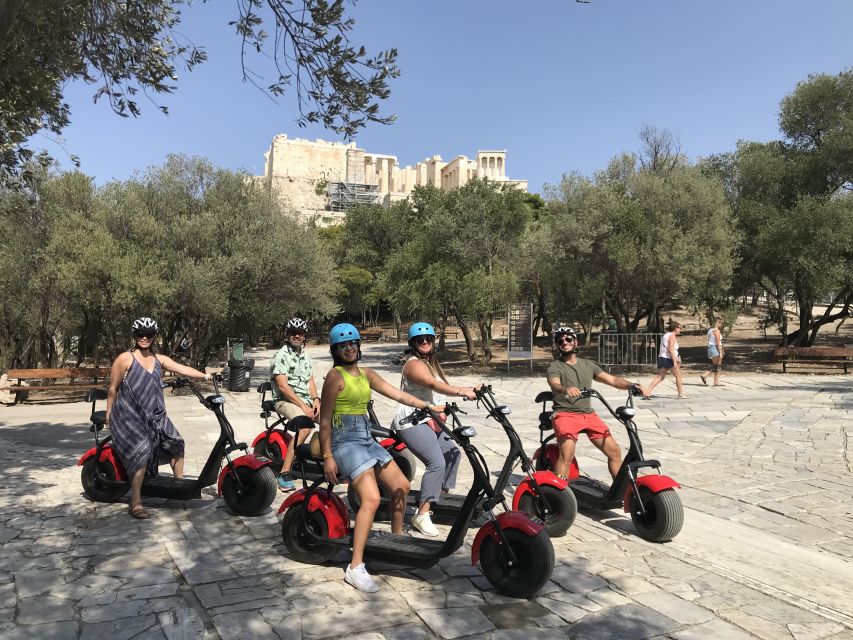
You’ll stop near the Temple of Hephaestus, and this part tends to land well because it’s a great example of how Greek temple architecture can look almost surprisingly intact. The guide connects the site to Greek mythology and cultural life, so it doesn’t feel like a stop you only photograph and forget.
Then there’s a juice and break moment to cool down before the route pushes back toward the highest-density historic zone. For most people, this is where the tour shifts from “learning the city” to “making the Acropolis section fun.”
The inclusion of water and juice isn’t just a nice-to-have. In Athens, it’s often the difference between a tour you remember happily and a tour you remember while trying not to overheat.
Flea market break in Thissio: eat, stretch, and reset

The tour includes time around Thissio flea market for a break. It’s not a long stop, but it’s long enough to reset your energy, grab a snack if you want, and take a breather from riding.
I like this kind of planned pause because it gives you control. You can either use it to wander a bit in the market atmosphere or just sit, hydrate, and regroup for the main Acropolis segment. With only two hours total, those minutes matter.
If you’re traveling with teens or anyone who’s easily bored by long, talk-heavy tours, this break helps keep the pace human.
Entering the Acropolis zone: short visits, big-picture meaning
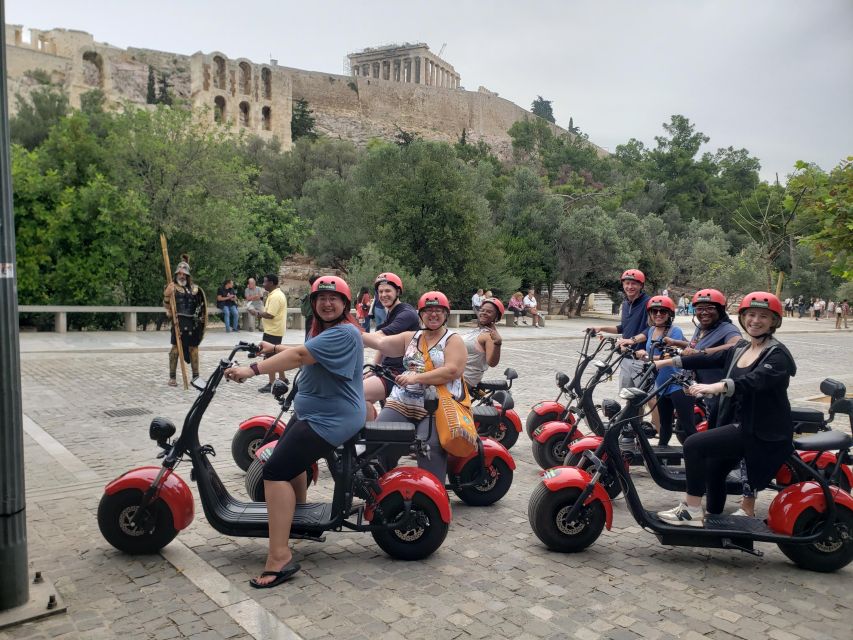
From the Thissio side, you’ll pass landmarks like the Acropolis Museum area and Makrygianni before you enter the main Acropolis area for brief, focused stops. The tour’s structure here is clear: quick viewing time at key points, plus photo stops where you can frame the best angles.
You’ll get time on the Acropolis of Athens (brief), then immediate photo-and-look moments at major icons like the Parthenon (very short). It may sound limiting on paper, but in practice it works well because you’re not trying to do an all-day Acropolis ticket plan.
Instead, you get the “hit” of standing at the heart of it and hearing what matters there, without the long lines and slow pacing that can drain a short trip.
Photo stops that help you read the ruins
Expect stops for photos and short looks at places such as:
- Theatre of Dionysus: a key reminder of how the arts shaped civic life.
- Temple of Olympian Zeus: huge scale, big contrast with the more intimate temple forms.
- Temple of Athena Nike: where the Acropolis feels almost surgical in detail and placement.
- Zappio District: a broader city view moment that helps connect the Acropolis to modern Athens.
- Propylaea and Erechtheion: gateways and complex layouts that explain why this whole zone feels like more than one building.
Then you’ll wrap with photo stops around Monastiraki and Filopappou, which keeps the tour from feeling like you vanish back into the same streets after the Acropolis rush.
What you actually get in two hours (and why the timing works)
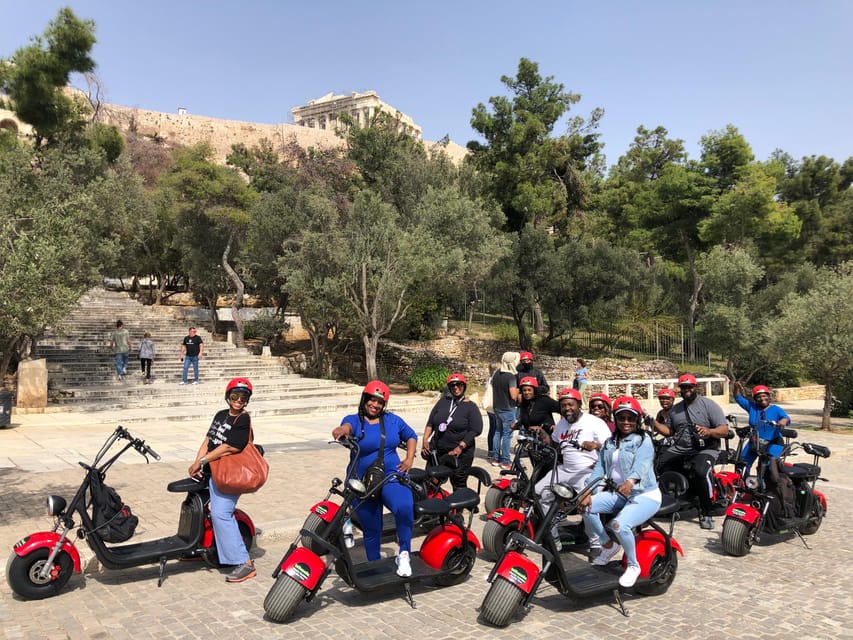
Two hours is short enough that you don’t lose your energy, and long enough that you don’t feel rushed through the important stories. The tour covers a lot of terrain efficiently, yet it never feels like a speed run.
This matters if you’re doing Athens in “real life mode,” where you also need time to eat, find shade, and choose which paid-entry sites are worth your money. The tour is a strong first pass because it helps you decide what you want to go back to later.
If you’re the type of traveler who likes a sightseeing plan for context, this format is made for you. Do it early in your trip, then build your remaining days around the sites that grabbed you most.
Price and value: why $69 can make sense
At $69 per person for a two-hour guided e-scooter experience, the price feels steep only if you compare it to a free walking option. But when you compare it to effort, time, and guided interpretation, it becomes easier to justify.
Here’s where the value shows up:
- You get a guided experience with explanations at multiple stops, not just a ride.
- You’re provided helmet, insurance, water, and juice, which are real costs when you’re already planning a day around the Acropolis.
- You cover ground that would be tiring (and time-consuming) on foot, especially in heat.
Also, it’s worth noting what’s not included: site entry tickets and guided tours inside the Acropolis/museums. That means you’re paying primarily for transportation plus guiding at outdoor viewpoints. If you want a full ticketed museum day, budget separately—but if you want the Acropolis area experience with less walking and more story context, the cost starts to look fair.
Safety, comfort, and who should skip it
The tour is built around controlled riding and a clear safety briefing. Helmets are provided, and the route avoids the kind of road chaos that would make sightseeing stressful.
Still, it’s not for everyone. It’s not suitable if you can’t ride a bike, and it’s also listed as not appropriate for people with vertigo, epilepsy, or haemophilia. If any of those apply, don’t try to push through. Better to pick a walking or accessible alternative that matches your comfort.
Comfort-wise, wear comfortable shoes and clothes and plan for a little riding time on uneven terrain. You don’t need special gear beyond that, but you’ll enjoy it more if you’re dressed for movement.
Do you get enough history, or is it just a fun ride?
From the way the guides teach, it’s both. The ride is the fun part, but the tour isn’t light on meaning. The guide brings up themes tied to democracy, philosophy, and mythology, and does it while you’re physically near the relevant places.
That’s why it works for different travel styles. If you love history, the stops give you story depth tied to actual locations. If you don’t, you still get a clear narrative arc and a better sense of what you’re looking at.
Guides like John, Venice, and Giannis (names that show up often) are remembered not only for facts but for the way they make explanations feel conversational—something you can ask about without feeling like you’re in a classroom.
Should you book this Athens Acropolis e-scooter tour?
You should book if you want:
- A fast way to see the Acropolis area with guidance and minimal walking
- A fun, mostly car-free way to move between top landmarks
- A tour that helps you choose what to return to later (with your own tickets)
You might skip it if:
- You need a fully ticketed museum-and-acropolis interior experience
- You’d rather spend your time slowly exploring on your own rather than following guided stop times
- You’re in a situation where riding a scooter/bike could be unsafe or uncomfortable for you
If your goal is to turn a tight Athens schedule into a smart, joyful preview of the Acropolis, this is one of the cleanest ways to do it. You get memorable views, strong storytelling, and a format that keeps the day moving without burning you out.
FAQ
Where is the meeting point for the Wheelz Acropolis e-scooter tour?
Meet at Wheelz Fat Bike Tours Acropolis at Chatzichristou 6A, behind the Acropolis Museum. It’s about two blocks from the Acropolis Metro Station.
What’s included in the tour price?
The tour includes the electric scooter, a guide, helmet, water, juice, and insurance.
Are Acropolis tickets included?
No. The tour does not include tickets for archaeological sites and museums and it also does not include entry or a guided tour inside the Acropolis. You see the Acropolis area from the outside.
How long is the tour?
The duration is 2 hours.
What language is the tour guide?
The live guide provides the tour in English.
What should I wear or bring?
Bring comfortable shoes and comfortable clothes (sports shoes are recommended).
Is the tour suitable for everyone?
It’s not suitable for people who can’t ride a bike, or for those with vertigo, epilepsy, or haemophilia.
What happens during the tour?
You’ll get a safety briefing and training, then ride around the Acropolis area with guided stops and photo stops, with water and juice during the experience, before returning to the meeting point.