REVIEW · ATHENS
Ancient Athens Electric ATV Scooter Tour
Book on GetYourGuide →Operated by Smart Urban · Bookable on GetYourGuide
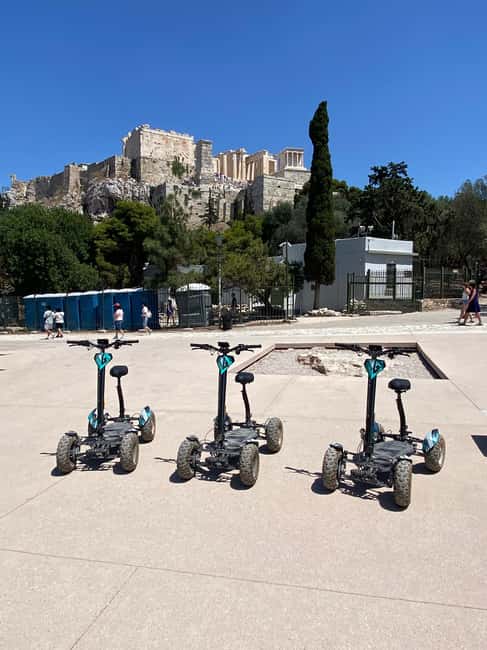
Four wheels and history up close. This Ancient Athens electric ATV scooter tour is a fast, friendly way to see major landmarks while you roll between neighborhoods, not just between photo spots. It starts in Plaka, then works its way toward the Acropolis slopes, the sites tied to democracy and public life, and the layers of Athens you usually only piece together by hopping around.
I especially like the electric four-wheel scooters for making the day feel doable. You get a real connection to viewpoints and streets around the Acropolis without wearing down your legs the way a walking-only plan can. I also like the way the route anchors ideas in places, with stops at Areopagus and Pnyx where you can picture courts and the assembly that shaped democracy.
One consideration: this tour has a riding focus, not a slow-paced museum vibe, so the 2-hour format moves at a clip. Also, it’s not suitable for children under 8, so plan around that if you’re traveling as a family.
In This Review
- Key highlights you’ll care about
- Why an electric ATV scooter is a smart way to see Ancient Athens
- Plaka check-in and scooter setup: what happens before you roll
- Along the Acropolis: Odeon of Herodes Atticus and skyline moments
- Areopagus and Pnyx: where you picture courts and democracy
- Thissio to Keramikos: the cemetery and pottery world
- Ancient Agora: following the public life of Athens at scooter speed
- Monastiraki Square, flea-market streets, and the Roman-layer ride
- The guide experience: clear stops, good pace, and personalities that matter
- Price and value: does $58 for 2 hours make sense?
- Practical tips so the ride feels smooth (not stressful)
- Who should book this scooter tour?
- Should you book the Ancient Athens Electric ATV Scooter Tour?
- FAQ
- How long is the Ancient Athens Electric ATV Scooter Tour?
- Where does the tour start?
- How big is the group?
- What languages are available?
- What’s included in the price?
- Is the tour suitable for children?
- Do I need to know how to ride an ATV scooter?
Key highlights you’ll care about
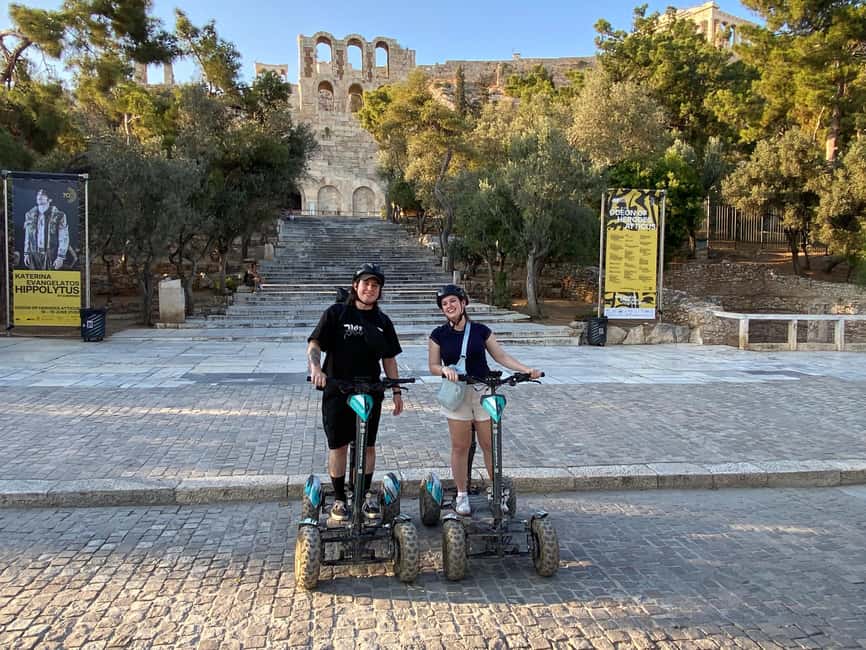
- Plaka as the starting point: classic Athens streets first, so the tour already feels like part of the city.
- Training, helmet, and insurance: you’re set up to ride confidently before you head into historic areas.
- Acropolis views plus an Odeon stop: you get skyline moments and a specific landmark, not just a drive-by.
- Areopagus and Pnyx: panoramic stops with context for how Athens handled decisions and justice.
- Small group limit (10 people): easier photo pauses and a tour pace that doesn’t feel chaotic.
Why an electric ATV scooter is a smart way to see Ancient Athens
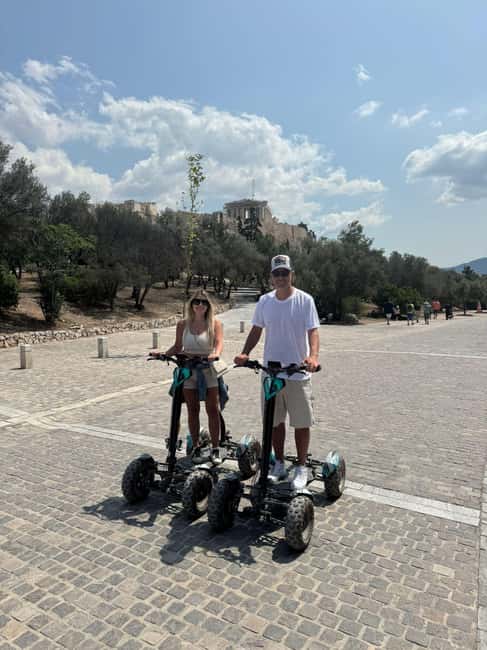
Athens can feel like two trips at once. There’s the famous postcard layer, and then there’s the daily-life city fabric around it. What I like about this tour is that it treats both as part of the same experience, using an electric four-wheel ATV scooter to move you through neighborhoods while you still stop at major archaeological points.
The time format matters here. In 2 hours, you’re not trying to see everything. You’re getting the key “spine” of the story: Acropolis area, Areopagus, Pnyx, Keramikos, Ancient Agora, then back toward Plaka with a few Roman-era stops along the way.
And because the scooter is electric and four-wheel, it’s a practical fit for people who want motion without turning the day into a knee test. You’re still outside, still walking a bit at each stop, and still dealing with Athens sunshine. But you’re not doing it all the hard way.
Plaka check-in and scooter setup: what happens before you roll

Your tour begins in Plaka, Athens’ oldest and most picturesque district. That’s not just a scenic choice. Starting here means you begin on streets that already feel historic, instead of jumping straight into a parking-lot logistics moment.
You’ll gear up with a helmet, go through training, and get insurance covered. That early setup is important because the tour isn’t only about sitting and listening. You’re actively riding between the sites, so you want your comfort level to be handled before the route gets busier.
The tour also includes water, and there’s WiFi on the scooters. WiFi won’t replace local knowledge, but it can help if you want to quickly check a map link, message home, or sort your photos as you go.
Small-group size is another quiet advantage. With a limit of 10 participants, you can usually hear your guide clearly at stops, and it’s easier to keep the group together for safer riding.
Along the Acropolis: Odeon of Herodes Atticus and skyline moments
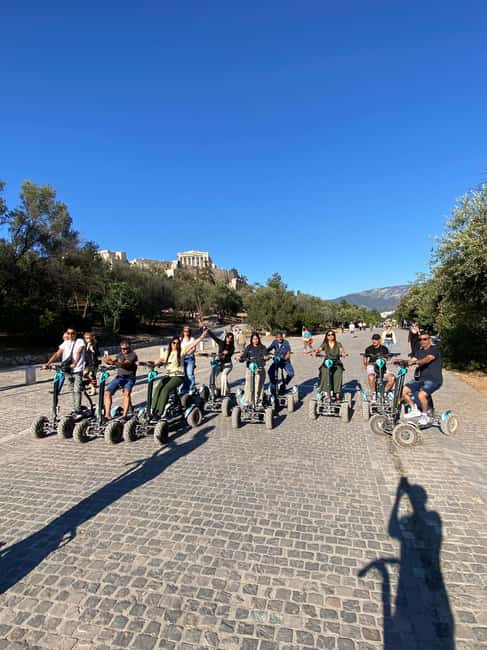
After you set up in Plaka, the route heads toward the Acropolis area for views you’ll recognize even if you’ve never studied Athens. You ride alongside the Acropolis, which gives you a moving perspective you don’t always get from a single overlook.
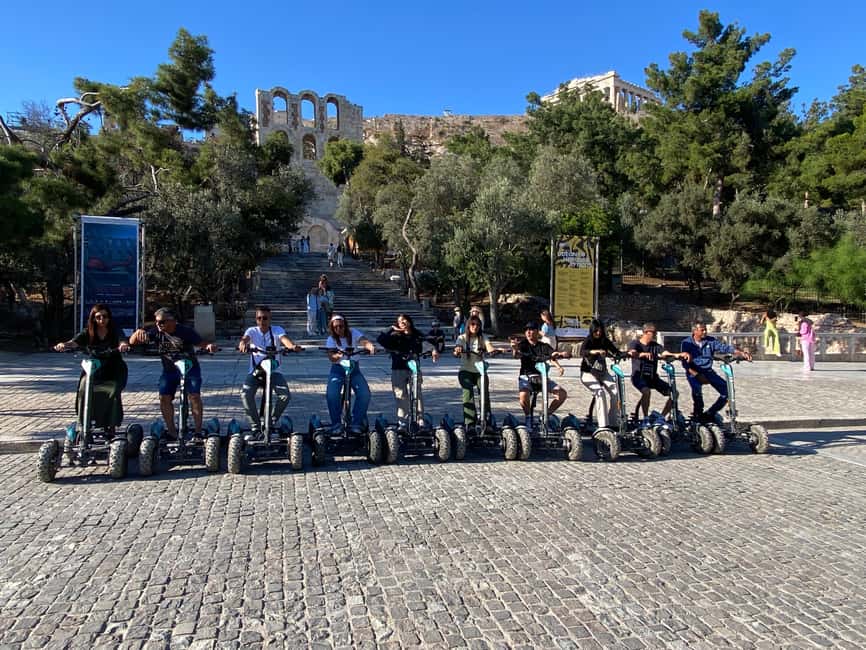
The first major stop is at the Odeon of Herodes Atticus, an ancient stone theater. This is one of those sites that helps you understand scale. Even if you just spend a short moment there, you’ll get a clearer picture of how performances and public gatherings were built into the city’s stone.
What I like about including a theater stop early is that it gives you variety right away. Many tours focus only on politics and temples. Here, you also see a cultural anchor—then you transition into neighborhoods and hills where civic life takes over.
If you want photos, this is also a good stretch. You’re riding through vantage points with the Acropolis in view, and the tour makes time for photographic opportunities.
Areopagus and Pnyx: where you picture courts and democracy
Next comes the hilly, panoramic part of the route, and it’s where the tour earns its “more than a ride” reputation.
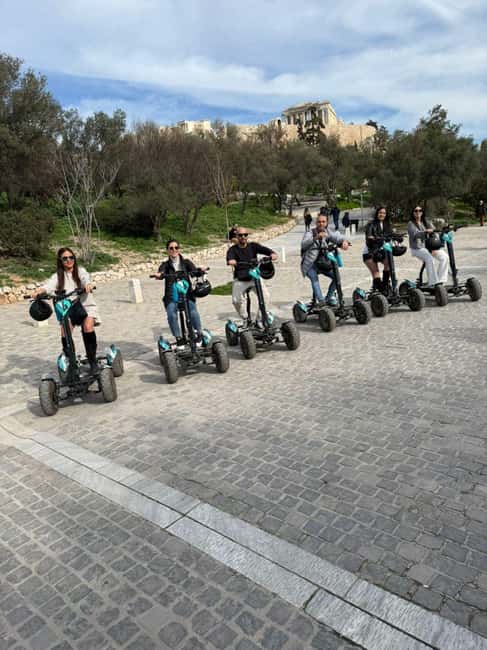
First is Hill of Mars (Areopagus). The big idea here is that this location was tied to ancient judicial proceedings. That’s a strong way to make sense of what you’re looking at: you’re not just climbing for a view, you’re standing in a place that connected geography to governance.
From the Areopagus area, you also get sweeping views of Athens and the Acropolis. That matters because the tour’s history becomes easier to hold onto when you can see the city’s layout. You start to feel how the hills relate to the public spaces you’ll reach later.
Then the route moves to Hill of Pnyx, described as the birthplace of democracy. This is where the tour connects a core concept—citizen assembly—to a physical spot where people once gathered to make political decisions.
Even if you don’t know much Greek history going in, these two stops are a clean learning arc. Courts first. Assembly next. It’s a straightforward way to understand how Athens organized power, and it gives you context for the later stops at the Agora.
Thissio to Keramikos: the cemetery and pottery world
After the hill stops, the tour shifts into the archaeological zone near Keramikos, with riding through Thissio along the way. Thissio is useful here because it’s a transition neighborhood. You move from big viewpoints into a more grounded archaeological setting.
Keramikos is often the kind of place people skip when they’re hunting only for the most famous ruins. That’s exactly why it fits this route. It’s an ancient cemetery and also a pottery production area, so it offers a different angle on classical Athens: not just temples and speeches, but everyday crafts and the way communities marked life and memory.
In a short tour format, you can’t spend hours everywhere. What you can do is build a sense of what Athens was like beyond monuments. Keramikos gives that texture, and it pairs well with the next stop at the Agora, where public life takes center stage.
Ancient Agora: following the public life of Athens at scooter speed
From Keramikos, the route continues toward the Ancient Agora, once the heart of public life in ancient Athens. This is where the tour’s pacing becomes part of the experience. You’re moving efficiently, but you still get strategic stops for historical information, photos, and a quick reset.
The Agora stop is important because it turns the earlier hill ideas into real civic spaces. If Areopagus and Pnyx are about judicial proceedings and assembly, the Agora is where day-to-day public activity happened—philosophers, politicians, merchants, and conversations all around the same grounds.
If you like making connections while you look, this stop rewards you. You begin to picture how people traveled between meeting places, debating areas, and social spaces. And because you’re on a scooter, you’re not trapped waiting in a single long line or scanning from one fixed angle.
Monastiraki Square, flea-market streets, and the Roman-layer ride

Before you get fully back toward Plaka, the route includes a pass by Monastiraki Square, including the area around the flea market. That part can feel like a palate cleanser after archaeological concentration. You go from ancient stone context back into the present-day city rhythm.
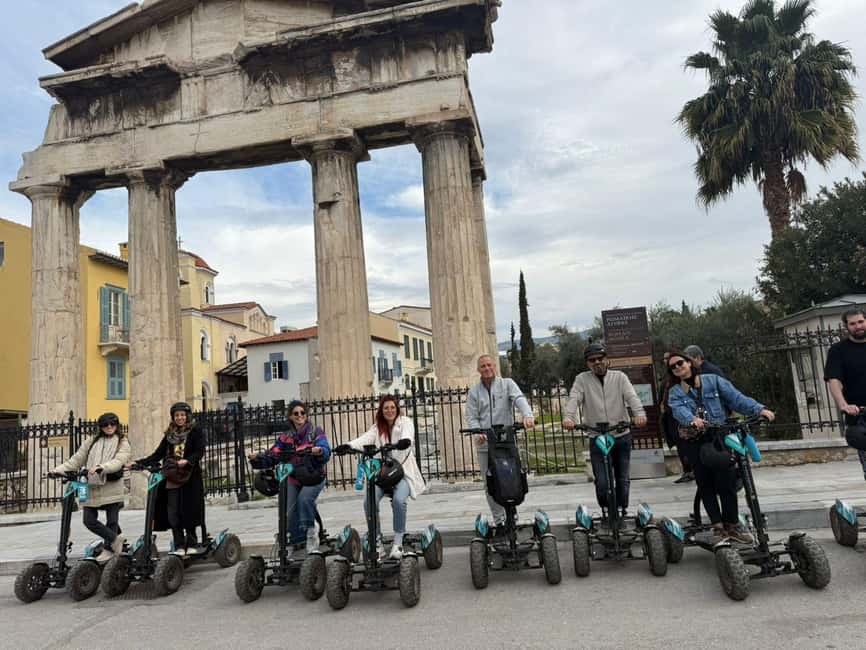
The tour then also cruises past the Library of Hadrian and the Roman Agora. This is a helpful reminder that Athens didn’t stop being Athens after its classical peak. Roman-era layers are part of what you’re seeing around the city, even when you’re focused on ancient Greece.
You won’t get a full Roman history lecture on every corner. But having the Roman stops placed right after the Agora section helps you keep the timeline straight. You start thinking in layers, not in one big straight line.
The guide experience: clear stops, good pace, and personalities that matter
Your guide is part of the value here. The tour runs with live commentary in English, Spanish, or Hebrew, and the format includes breaks for hydration and photography.
In terms of guide style, I’d use a practical lens: the best experience is the one where you ask questions and get quick, useful answers. Some guides connected with this tour, like Bill, are praised for being patient, friendly, and good at practical advice and scenic routing. Others, like Demi, are noted for clear explanations and an easygoing way of keeping the energy up.
One fair note: guide personalities can affect how fun the stories feel. If you prefer nonstop storytelling, pick your language carefully and go in with the mindset that you’ll get the most out of it by engaging during the stops.
Price and value: does $58 for 2 hours make sense?
At $58 per person for a 2-hour tour, the value depends on what you want to optimize.
If your goal is seeing major landmarks with less fatigue, this can be a strong deal. You’re covering a lot of ground compared to walking-only planning, and you’re getting a guided explanation at multiple stops rather than just a self-guided wander where you might miss context.
It also includes useful items that normally add up on their own: helmet, insurance, training, water, and WiFi. You also get the small group format (up to 10 people), which tends to make photo stops and navigation easier.
What you’re paying for isn’t only the scooter. It’s the time-saving route, the guided connection between sites and ideas, and the ability to hit both viewpoints and archaeology in one compact window.
If you’re the type who wants to stay at one site for a long, slow read-through, you might find the pacing too tight. But if you want a well-structured overview you can build on later with your own exploring, this format fits.
Practical tips so the ride feels smooth (not stressful)
Here are a few things that make scooter tours easier in Athens-style streets.
First, arrive ready to ride. Even with training, you’ll do better if you’re comfortable with basic control and sitting posture. Wear clothing that won’t restrict you when turning or braking.
Second, protect from sun and heat. You’ll have brief hydration breaks, but you’re still outdoors most of the time, especially around hill viewpoints.
Third, treat photo stops like “mini checkpoints.” When your guide pauses for views or explanation, take the photo right away. If you wait, the group may move on quickly.
Fourth, use the scooter time strategically. After the initial setup, you’re riding between clusters: Acropolis area, hill viewpoints, archaeological zones, then back through neighborhoods. That rhythm is the tour’s strength. It helps you feel like you’re moving through a story, not just collecting stops.
Finally, if you have a strong interest in one theme—courts and justice, democracy, theater and public life, Roman layers—lean into it with questions at the relevant stops. Your guide can help you connect what you see to what it meant.
Who should book this scooter tour?
This works well if you:
- Want a guided overview that hits several major Ancient Athens sites in a short window.
- Prefer less walking but still want genuine stops at real landmarks.
- Like photo opportunities with panoramic viewpoints.
- Travel with limited time and want a plan that feels organized.
It might be less ideal if you:
- Want a slow, museum-style pace.
- Are traveling with kids who are below the minimum age (it’s not suitable for children under 8).
- Want to spend a long, quiet time inside only one archaeological site.
Should you book the Ancient Athens Electric ATV Scooter Tour?
If you’re trying to “do Athens” without turning your trip into a leg day, I think this is a smart buy. The route connects key ideas—judicial proceedings, democracy, and public life—with the physical places tied to them, and it does it in a way that keeps you moving through the city instead of stuck in one spot.
My recommendation: book it if you want a structured first look that helps you later choose what to revisit on your own. Skip it if you’re committed to slow pacing at a smaller number of sites, or if a ride-focused day doesn’t match how you like to travel.
FAQ
How long is the Ancient Athens Electric ATV Scooter Tour?
The tour lasts 2 hours.
Where does the tour start?
It starts in the Plaka neighborhood.
How big is the group?
The group is small, limited to 10 participants.
What languages are available?
The live tour guide is offered in English, Spanish, and Hebrew.
What’s included in the price?
Included items are the tour guide, an ATV scooter (MIA Four ATV Scooter), helmet, insurance, training, water, and WiFi.
Is the tour suitable for children?
It is not suitable for children under 8 years old.
Do I need to know how to ride an ATV scooter?
You’ll receive training as part of the experience, along with a helmet and insurance.