Krakow feels fast when you ride it. This 2.5-hour scooter tour with an English guide mixes big sights with calmer backstreets, plus a regional food tasting stop, so you get both context and something to eat. I like the way the route hits highlights without turning your day into a checklist, and I really like that there’s safety orientation and helmet support before you head out. The main thing to consider is that you need moderate physical fitness for scooting and stopping often, and the minimum age is 12.
Small group size matters here: it’s capped at 8 people, so your guide can keep the pace friendly and help you get comfortable. Since the tour ends back at the meeting point, you can roll right into your next plan without a complicated transit puzzle.
In This Review
- Key Points to Know Before You Go
- Scooter Training and Safety at plac Szczepański 8
- How the 2.5-Hour Route Works (and Why the Stops Are Short)
- Szczepański Square and the Vistula Side Story of the Wawel Dragon
- Kazimierz: Szeroka Street, Synagogue Area Views, and the Feel of Old Shops
- Plac Bohaterów Getta and the Symbolic Chairs Moment
- Kanonicza Street: The Old Tenements and Restaurants You Might Miss
- Barbican and the Florian Gate Story at the Museum of Krakow
- Cloth Hall (Sukiennice): A Central Marketplace for Souvenirs and Local Products
- Food Tasting: A Short Break That Changes the Day
- Value Check: Is $73.15 Good for This Kind of Tour?
- Who This Krakow Scooter + Food Tour Fits Best
- Tips to Make the Most of Your 2.5 Hours
- Should You Book This Tour?
- FAQ
- How long is the Krakow City Tour on Scooter and Food Tasting?
- What does the tour cost?
- Do I need prior scooter experience?
- What’s included with the tour?
- Where is the meeting point?
- How many people are in the group?
- What is the minimum age?
- Is this tour weather-dependent?
- Is an English guide provided?
- Can I cancel and get a full refund?
Key Points to Know Before You Go
- Scooter setup and training included so you do not need prior experience
- Helmet provided and you get a safety orientation before riding
- Stop-and-learn pacing with short visits to major sights and quieter streets
- Kazimierz focus with stops tied to Krakow’s Jewish history and monuments
- Regional food tasting built into the route, not tacked on at the end
- Small group cap (8) helps the tour feel personal and keeps logistics simple
Scooter Training and Safety at plac Szczepański 8
You start at plac Szczepański 8 (31-011 Kraków). It’s a central place to meet, and it’s also described as near public transportation, which helps if you’re pairing this with other sights later.
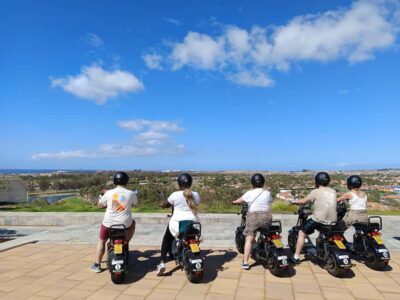
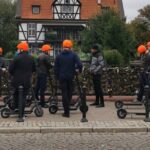
This tour doesn’t assume you already know how to ride. You get scooter and training, plus a safety orientation and a helmet before you set off. That combo is a big deal, because the best part of a scooter tour is moving quickly between neighborhoods, and that only feels relaxing when you’re confident on the scooter.
I’d treat this like a short “get your bearings” session. If you’re even slightly nervous, use the training time fully. Once you’re rolling, the guide can explain what you’re seeing as you go, and you spend less brainpower thinking about the vehicle.
How the 2.5-Hour Route Works (and Why the Stops Are Short)
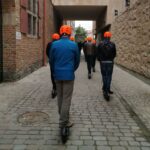
The ride lasts about 2 hours 30 minutes, and the plan is built around multiple stops—each one around ten minutes. That sounds quick, but it’s a smart way to handle Krakow, because the city rewards variety. You’ll cover top attractions, then you’ll get pulled into nearby areas that many visitors only see from the outside.
The short stop format is also practical. You are not stuck in one place waiting in long lines or spending your whole time reading from a distance. Instead, you get enough time to orient yourself, hear the story from the guide, and take a few photos before you move on.
A possible drawback: if you strongly prefer lingering—slow photos, long museum time, deep conversations—you may wish for more time at each stop. This is a “best overview with context” tour, not a one-sight deep-dive.
Szczepański Square and the Vistula Side Story of the Wawel Dragon
Your first stop is Szczepanski Square, where you begin the city story. It’s a good start because it helps you connect Krakow’s layout to what you’ll see next. The guide’s job early on is to set the rhythm: where you’re headed, why these places matter, and how to watch for details while you’re riding.
Next comes the Monument of the Wawel Dragon by the Vistula River, in front of the Wawel Dragon area. The focus here is story. Wawel Castle and the legendary creature tie Krakow’s medieval myth-world to a real, walkable riverside setting. You get the sense that this city isn’t only about stone and dates—it’s also about local legends people still repeat.
If you like places where legend and geography connect, this stop is for you. If you want purely architectural details, you may enjoy it more as a narrative “chapter” than as a full sightseeing session.
Kazimierz: Szeroka Street, Synagogue Area Views, and the Feel of Old Shops
After the Wawel Dragon, the tour moves into Kazimierz, including Szeroka Street. This stretch is known for its old Jewish shopfronts and its synagogue presence, and it carries a distinct neighborhood vibe compared with the main center.
Here’s what’s useful: you’re not just passing through. You stop long enough to register the street character—small-scale, human-scale buildings, and the sense of a community that once shaped this part of Krakow in major ways.
When you ride, you can miss street texture. So use your stop time to look closely: building heights, storefront patterns, and the way the street bends. Even if you only have a few minutes, it helps you understand why Kazimierz is such a magnet for travelers who want a different flavor of Krakow.
Plac Bohaterów Getta and the Symbolic Chairs Moment
You continue in the former Jewish district at Kazmierz, including Plac Bohaterów Getta and its symbolic chairs monument. This is one of those stops that changes how you see a city, because the guide can frame the site beyond “just a photo spot.”
With a short visit, you’re not expected to read everything on your own. The value is that your guide can explain what you’re looking at and what it represents in Krakow’s story. It’s a respectful, direct way to include difficult history in a tour that also has fun scooter momentum.
This is also the stop where I recommend keeping your phone use respectful and focused. If you’re not sure how to treat memorials, let the guide’s pacing guide you.
Kanonicza Street: The Old Tenements and Restaurants You Might Miss
Next up is Ulica Kanonicza (Kanonicza Street)—a smaller, intimate street lined with older tenement houses and restaurants tucked in. Even without specific restaurant details provided, the point of the stop is the street feel: you get a break from the bigger landmarks and into a more local, lived-in Krakow.
This stop is a reminder that Krakow’s charm is not only in famous squares. Streets like this are where you start to imagine what everyday life would feel like in the city. It’s also a nice change of pace after memorial and synagogue-focused context.
Practical tip: if you love street-level wandering, use the ten-minute pause to walk a bit beyond the exact point of the scooter stop. Just keep an eye on your guide so you do not get separated.
Barbican and the Florian Gate Story at the Museum of Krakow
The tour then goes to the Barbican and the Museum of Krakow, with a focus on the history of Krakow’s fortifications, including the story of the Florian Gate. This is where the city’s defense system becomes understandable.
Fortifications can be hard to picture without guidance. Here, your guide connects the dots between what you can see now and how the city used walls and gateways to control movement. You get the sense of Krakow as a walled city built for protection, not only display.
One thing to know: if your interests are strictly modern, this part might feel more “historical lecture” than “scenic cruising.” But even then, the fortification story helps you make sense of why the city’s center feels the way it does.
Cloth Hall (Sukiennice): A Central Marketplace for Souvenirs and Local Products
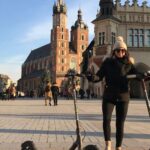
The final major highlight is Sukiennice (Cloth Hall), an old marketplace in Krakow’s center. This stop is practical and enjoyable because it’s a place that still functions. You can browse for souvenirs and regional products right in the heart of the action.
Even if you do not buy anything, this is a useful last stop for orientation. When you’re done with the tour, you can treat Sukiennice as a map anchor. It’s easy to return to and easy to use to plan the rest of your day or evening.
This is also the most “everyone knows it” stop on the route, but that’s not a flaw. It closes the loop nicely: history and neighborhood context earlier, then a central place you can explore on your own afterward.
Food Tasting: A Short Break That Changes the Day
This experience includes a food tasting during the route. The tour description frames it as regional foods, and the reviews also highlight that the food is delicious.
Why this matters: food tasting tours work best when the snack is tied to the places you’re learning about. Here, you’re tasting while you’re still riding through the city’s cultural layers, which makes the tasting feel like part of the story instead of an unrelated stop.
What to expect practically: you will still be moving afterward. So don’t plan a heavy lunch right before you go. If you’ve got a sweet tooth, still be ready for savory tastes too, because “regional” in Krakow often means comfort-style bites and simple, flavorful food.
Value Check: Is $73.15 Good for This Kind of Tour?
At $73.15 per person for about 2.5 hours, you’re paying for more than a guide and a route. You’re also paying for scooter training, helmet use, a small group experience (max 8), and included food tasting.
For many visitors, that combination is the real value. A walking tour won’t give you the same neighborhood coverage speed. A scooter tour without food wouldn’t offer the same cultural break. And a food tour without movement would miss the “get your bearings fast” benefit.
One subtle point: the tour is average-booked about 20 days in advance, which suggests a steady demand. If you’re traveling in busier weeks or on a weekend, it’s smart to lock it in earlier so you get the timing you want.
Who This Krakow Scooter + Food Tour Fits Best
This is a great match if you want:
- A fast, guided overview of Krakow with clear story connections
- A mix of central sights and lesser-seen street character, especially around Kazimierz
- A fun intro for planning the rest of your trip
It may be less ideal if:
- You want long stays at a single attraction
- You hate riding or you prefer slow, full museum-style visits
- You need a fully seated, low-movement experience (this one expects moderate fitness and scooter riding)
The minimum age is 12, and the group is small. If you’re with teens who can handle scooters safely and adults who want variety, it’s a solid option.
Tips to Make the Most of Your 2.5 Hours
- Dress for the weather and bring layers if Krakow is shifting day-to-day. This tour is described as requiring good weather, so plan around that.
- Wear closed-toe shoes that grip well. You’ll be stopping and starting, and you’ll thank yourself for stable footing.
- Keep your phone charged. You’ll likely want photos at Wawel Dragon, the Kazimierz area, and the Cloth Hall.
- Think of each stop as a chapter. After the tour, you can choose which chapter you want to read in more detail on your own.
Should You Book This Tour?
I’d book this Krakow scooter and food tour if you want a smart first pass through the city with enough context to help you pick what to do next. The strongest selling points are the small group size, the easy scooter learning setup, and the way the route ties together major landmarks with the Kazimierz neighborhood story. Add the food tasting, and it becomes a full experience instead of just a ride with sightseeing photos.
If you’re the type who likes to linger for an hour at one spot, you might feel the stop timing is short. But if you want variety, stories, and momentum in a single morning or afternoon window, this one is a good value way to get your bearings fast.
FAQ
How long is the Krakow City Tour on Scooter and Food Tasting?
The tour runs about 2 hours 30 minutes (approximately).
What does the tour cost?
The price is $73.15 per person.
Do I need prior scooter experience?
No. Scooter training is included, and the tour is described as easy to learn.
What’s included with the tour?
You get scooter and training, a helmet, food tasting, and a professional English-speaking guide.
Where is the meeting point?
The meeting point is plac Szczepański 8, 31-011 Kraków, Poland.
How many people are in the group?
The tour has a maximum of 8 travelers.
What is the minimum age?
The minimum age is 12 years old.
Is this tour weather-dependent?
Yes. The experience requires good weather. If it’s canceled due to poor weather, you’ll be offered a different date or a full refund.
Is an English guide provided?
Yes, the guide is professional and English-speaking.
Can I cancel and get a full refund?
Yes. You can cancel up to 24 hours in advance for a full refund. Canceling less than 24 hours before the start time is not refunded.