REVIEW · DUSSELDORF
Düsseldorf: E-Scooter City Tour
Book on GetYourGuide →Operated by ScuddyTours Rheinmetropolen by CityFreizeit · Bookable on GetYourGuide
Two hours. Big Rhine energy.
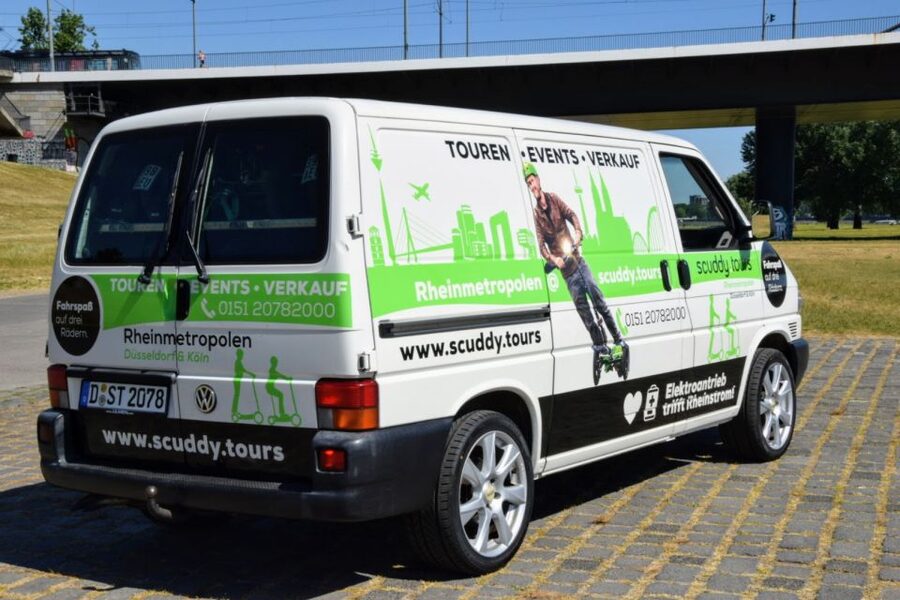
A Scuddy e-scooter city tour is one of the easiest ways to see Düsseldorf’s center without walking yourself into a blister. You start up at the Rheinturm area, then roll through the old town and along the Rhine, with the state parliament and Rheinknie bridge in your view. I also like that this stays small-group (up to 7 people), so you’re not stuck in a slow conga line.
I really love the tour’s tone: relaxed, funny, and very local. The guide keeps things moving, but still stops enough to explain what you’re looking at, with plenty of Rhenish humor. In my notes from the experience, Dieter shows up as a standout guide—people remember his easygoing style and playful storytelling mixed with practical sight explanations.
One thing to think about first: the tour is German only, and you must bring a driver’s license to ride. If you don’t have one or you’re not comfortable with German, this is likely to feel frustrating instead of fun.
In This Review
- Quick take before you go
- Where You Start at Rheinturm and Why That Matters
- Riding Along the Rhine: Rheinknie Bridge Views and the Pace of the Route
- Burgplatz, the Old Town, and St. Lambertus’ Leaning Tower
- Andreas Quartier and the Local Blend of Living, Art, and Food
- Hofgarten, Kö-Bogen II, and the Green Façade Moment
- Schadowstraße Back to the Rhine: Shopping Streets to Riverside Calm
- Price and Value: Is $69 Worth a 2-Hour Scuddy Ride?
- Who This Düsseldorf E-Scooter Tour Suits Best
- Should You Book This Düsseldorf Scuddy City Tour?
- FAQ
- Do I need a driver’s license to join the e-scooter tour?
- Where is the meeting point for the tour?
- What language is the tour guide?
- How long is the tour, and how much does it cost?
- What is included with the tour?
- What group size should I expect?
Quick take before you go
- Start at Rheinturm/Rhine Tower area for immediate “Düsseldorf from above” energy
- Scuddy e-scooters are easy to handle, with helmet included
- Small group size (2–7) makes stops and explanations feel personal
- Rhine-focused route connects bridges, old town landmarks, and the promenade
- Modern + classic mix: Hofgarten, K20, Kö-Bogen II, Schadowstraße, and signature architecture
- Not an art-history lecture, so expect vibe and local color over museum-depth facts
Where You Start at Rheinturm and Why That Matters
Meeting is in the parking lot near the entrance barrier in front of the Rheinturm (the Rhine Tower). That’s a smart choice because Düsseldorf instantly becomes a scale model in front of you. Even if you’ve only seen the city from train windows before, this start helps you get your bearings fast—and it’s right where the city’s Rhine story begins.
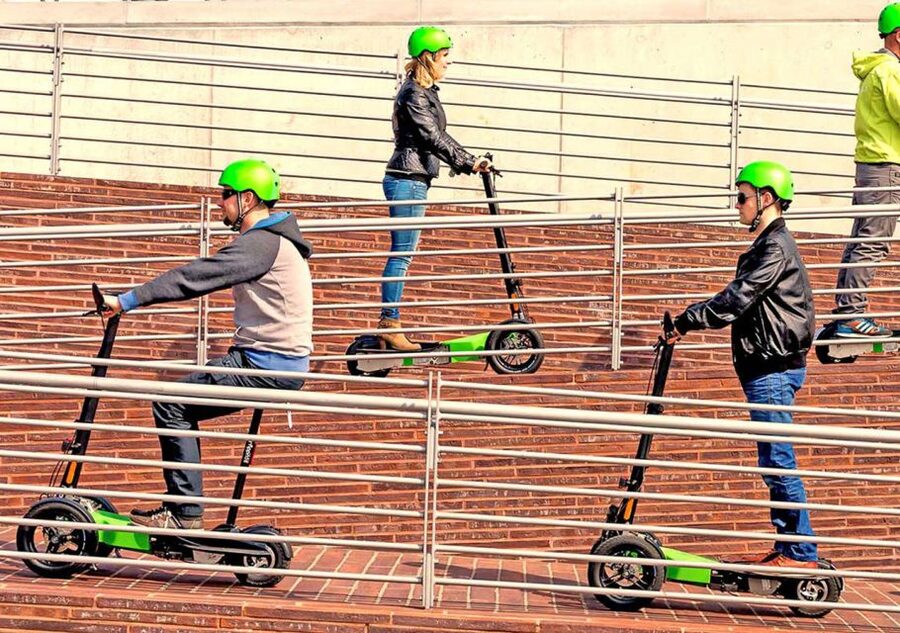
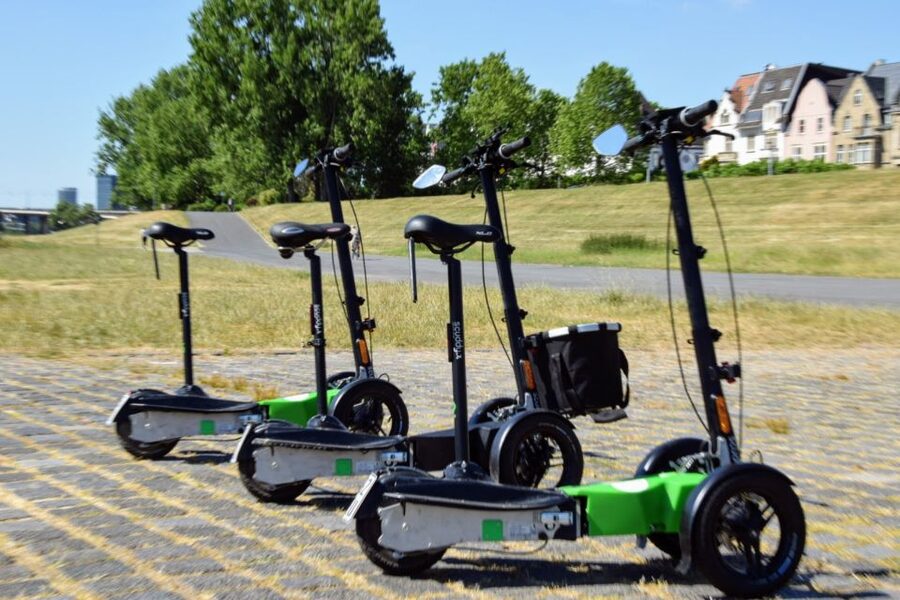
From the first minutes, the tour sets a simple rhythm: gear up (you get a helmet), mount the scooter, and settle into the comfortable pace. The Scuddy format is designed for sitting or standing, which makes a big difference. If you want an easier ride on day one of vacation, sit. If you prefer a more athletic feel, stand.
Also, this tour is led in German, and the tour’s “how” matters as much as the “what.” The best experience comes when you can catch the guide’s explanations and jokes. If your German is basic, you may still follow the sights by repetition, but this is not the kind of tour that quietly translates itself.
Riding Along the Rhine: Rheinknie Bridge Views and the Pace of the Route
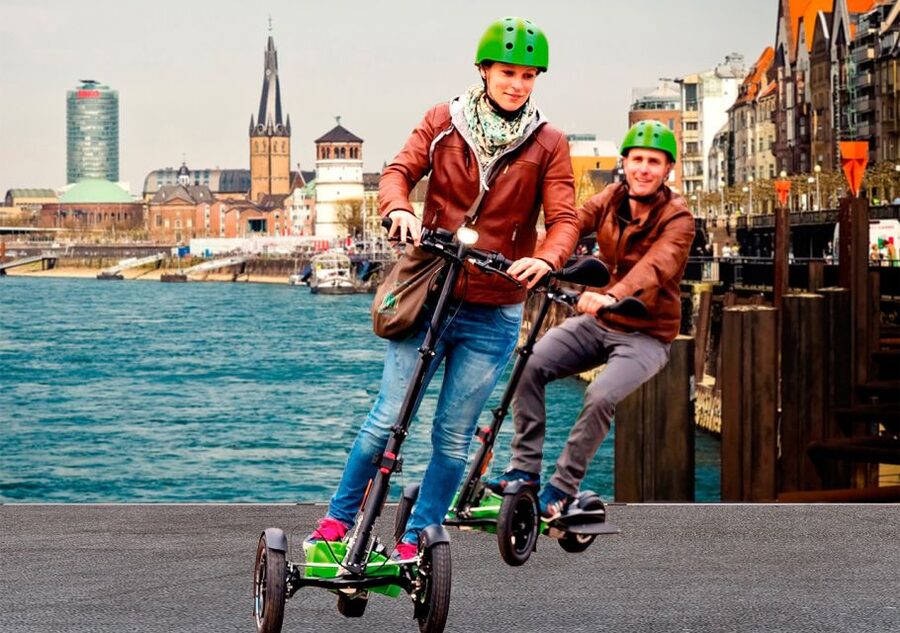
The tour begins with a ride along the Rhine, which is exactly how Düsseldorf should be introduced. The river acts like a visual highway. You glide, look, and connect landmarks without constantly stopping to regroup.
You’ll head across big-open areas like Burgplatz (with the castle tower) and keep close to the river to reach the Oberkassel Bridge. That “close to the Rhine” detail is not random. It keeps you framed by the water and bridges, and it saves you from having to fight city traffic or zigzag around for best angles.
One of the joys here is the sense of flow: you can enjoy the scenery without the friction of parking, tickets, or buses. This is a 2-hour tour, so the route is designed to feel full but not exhausting. And because the group is small, you don’t spend your time waiting for a crowd to bunch up and decide where to go.
If you’re sensitive to noise or motion, you’ll still likely be fine—this is not described as a high-speed thrill ride. It’s more “relax and cruise,” with frequent safe stops for explanation.
Burgplatz, the Old Town, and St. Lambertus’ Leaning Tower
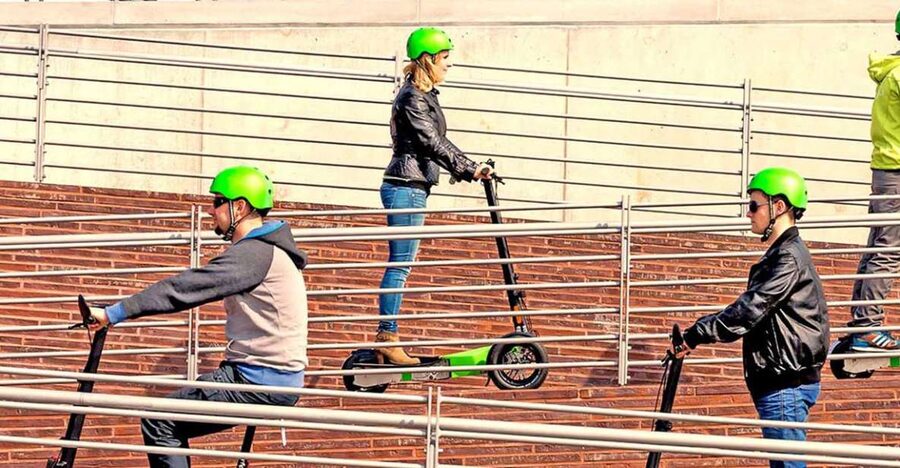
From the river area, you roll toward the old town. The first stop point you’ll recognize is St. Lambertus Church, famous here for its leaning tower. That’s the kind of landmark people remember, because it’s visual from a distance and it gives Düsseldorf a character that’s different from “another German city center.”
Before you get fully into the old-town mood, you pass by Burgplatz and the castle tower. Even if you’re not chasing deep historical detail, those stops are useful. They help you connect why Düsseldorf’s layout makes sense: river, civic center, and the places people built their lives around.
The tour deliberately doesn’t feel like an art-historical lecture. That’s good news if you want a fun, low-pressure city walk alternative with local commentary and jokes. You’ll get explanations, but you won’t be trapped in timelines and museum-level specifics.
A small practical note: old-town streets can be busy, and scooter paths can be narrow depending on your exact line. The advantage is that the guide is coordinating you as a group. The tour is built around an easy scooter and a smooth pace, so it should feel like sightseeing—not problem-solving.
Andreas Quartier and the Local Blend of Living, Art, and Food
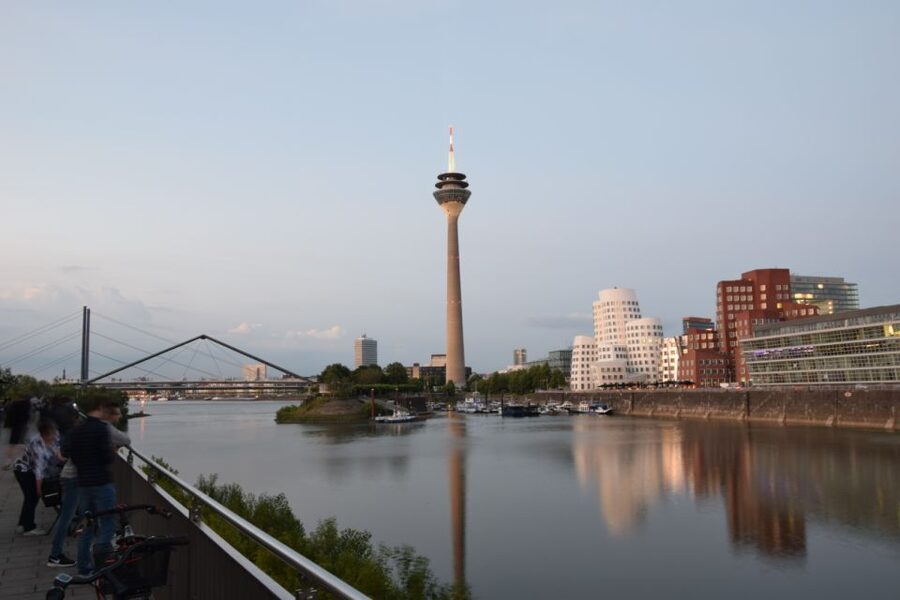
After the old town, you enter Andreas Quartier, described as Düsseldorf’s living-room feeling—where living, art, culture, and cuisine overlap. This is one of the tour segments I’d call “what makes Düsseldorf feel like Düsseldorf.” It’s not just buildings. It’s the mixture of everyday life and creative energy.
You also pass K20, an art collection. Here’s where you should calibrate expectations: this is not an art-history tour. Instead of museum-style deep dives, you get a guided sense of place—what K20 represents in the city, and why it fits into Düsseldorf’s identity.
If you like your city explanations to be human-sized and street-level, you’ll probably love this part. The guide’s humor and local color become part of the sightseeing. That matters on a scooter, because you want the route to feel intentional, not random.
And because the group is small, you can usually hear instructions and follow the route without the “everyone stops at once” chaos you sometimes get on larger tours.
Hofgarten, Kö-Bogen II, and the Green Façade Moment
Next comes the Hofgarten and then Kö-Bogen II, including a detour toward major architecture stops. The highlight people remember from this stretch is Kö-Bogen II’s green façade, described as Europe’s largest in this context. Even if you don’t know much architecture, you’ll understand what the guide wants you to notice: the city’s design choices are forward-looking, and Düsseldorf is not stuck in postcard mode.
You’ll also get to see the Schauspielhaus area and later Drei-Scheiben-Haus, an impressive contemporary building from the 1960s. This mix—park space, shopping-area modern design, then a signature 1960s landmark—adds variety without requiring long walks.
A drawback to keep in mind: contemporary architecture can feel abstract if you’re expecting dramatic ancient ruins or medieval streets. But if you like modern-city design and you want a quick taste of how Düsseldorf thinks about public space, this is a good fit.
On a scooter, the best part is you’re not stuck standing still for long. You view, you roll, you compare impressions, and you move on before fatigue kicks in.
Schadowstraße Back to the Rhine: Shopping Streets to Riverside Calm
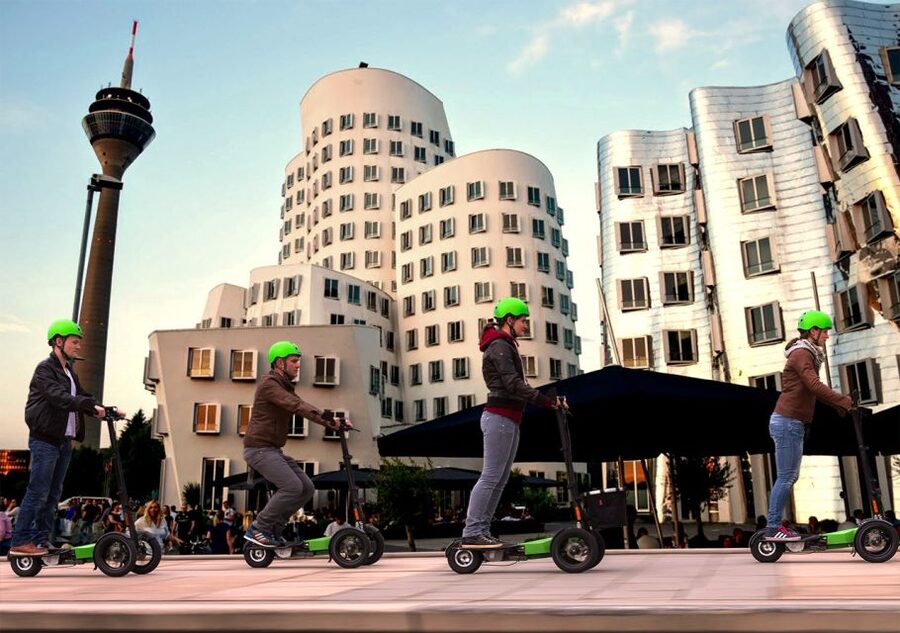
As you head back, the route slows through Schadowstraße, described as Düsseldorf’s new pedestrian shopping paradise. This is a practical choice. Pedestrian shopping streets give you smoother movement and a safer feel for scooter routing than highly car-heavy lanes.
Then you return toward the Rhine promenade and back to the starting area. That ending works well because the river is where Düsseldorf feels most open. Even if you spent the earlier part of the tour near dense city sights, the promenade brings you into a different rhythm—more space, more air, and that “this city breathes by the water” feeling.
This closing segment is also where the tour’s pace pays off. The route is designed so you finish feeling like you’ve seen a lot, not like you’ve been rushed. In a 2-hour format, that balance is everything.
Price and Value: Is $69 Worth a 2-Hour Scuddy Ride?
At $69 per person for 2 hours, the big question is what you’re buying: transportation, guiding, and a route that strings together the river, old town, and modern city core.
Here’s the value logic I’d use. You’re getting:
- an actual guided route from a local, in a small group
- a Scuddy e-scooter plus a helmet
- a concentrated circuit that would take you much longer on foot
If you were trying to assemble this mix yourself, you’d likely spend time coordinating transport and figuring out the best line through the center—especially for river-adjacent sights. The tour does the “planning work” for you, and it does it at a pace that still leaves room to enjoy.
Also, the feedback score is strong: the experience sits around 4.5 out of 5 with 70 reviews, and a reported 86% gave top scores for transport. That doesn’t guarantee anything, but it supports the idea that the scooters and guidance are doing their job.
If you want a workout, this isn’t it. If you want efficient, fun city coverage with local humor, it’s priced in a range that can feel fair.
Who This Düsseldorf E-Scooter Tour Suits Best
I’d book this if you:
- want a fun, easy way to see Düsseldorf’s core sights in a short window
- like a guide who keeps things relaxed and humor-forward (not overly academic)
- prefer small groups where the route doesn’t feel like a group project
It’s also a great option as a first-day orientation. The Rhine route, old-town landmarks like St. Lambertus, and the modern architecture stops help you build a mental map quickly.
But I would skip it if:
- you don’t have a driver’s license (you need one to ride)
- you don’t speak German, since the tour is only offered in German
- you only enjoy very deep historical explanations and long museum-style content
Should You Book This Düsseldorf Scuddy City Tour?
If your goal is to see Düsseldorf efficiently, with a friendly guide and a ride that feels playful rather than exhausting, I think you should strongly consider it. The Rhine Tower start, the river segment, the old-town landmark of St. Lambertus’ leaning tower, plus the modern stops around Kö-Bogen II and signature architecture make the 2 hours feel like a complete circuit.
The decision comes down to two basics: license + language. If you have a driver’s license and you’re okay with German-only commentary, this is a great value way to experience the city center. If either of those is a problem, you’ll likely lose enjoyment fast—and there are other ways to tour Düsseldorf that don’t require those constraints.
FAQ
Do I need a driver’s license to join the e-scooter tour?
Yes. The tour is not suitable for people without a driver’s license, and you should bring your driver’s license with you.
Where is the meeting point for the tour?
You meet your guide in the parking lot near the entrance barrier in front of the Rheinturm (the Rhine Tower).
What language is the tour guide?
The tour guide speaks German only.
How long is the tour, and how much does it cost?
The tour lasts 2 hours and costs $69 per person.
What is included with the tour?
The tour includes the guide, the e-scooter, and a helmet.
What group size should I expect?
The group size ranges from 2 to 7 people.